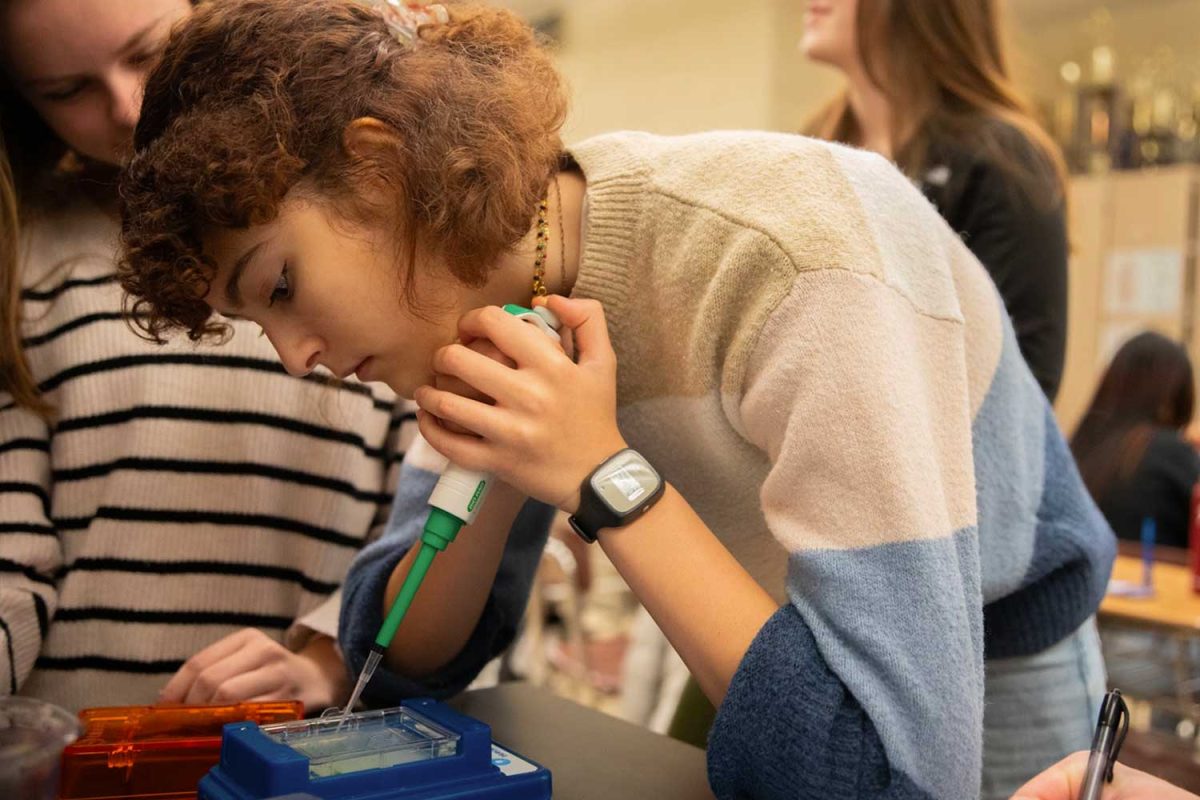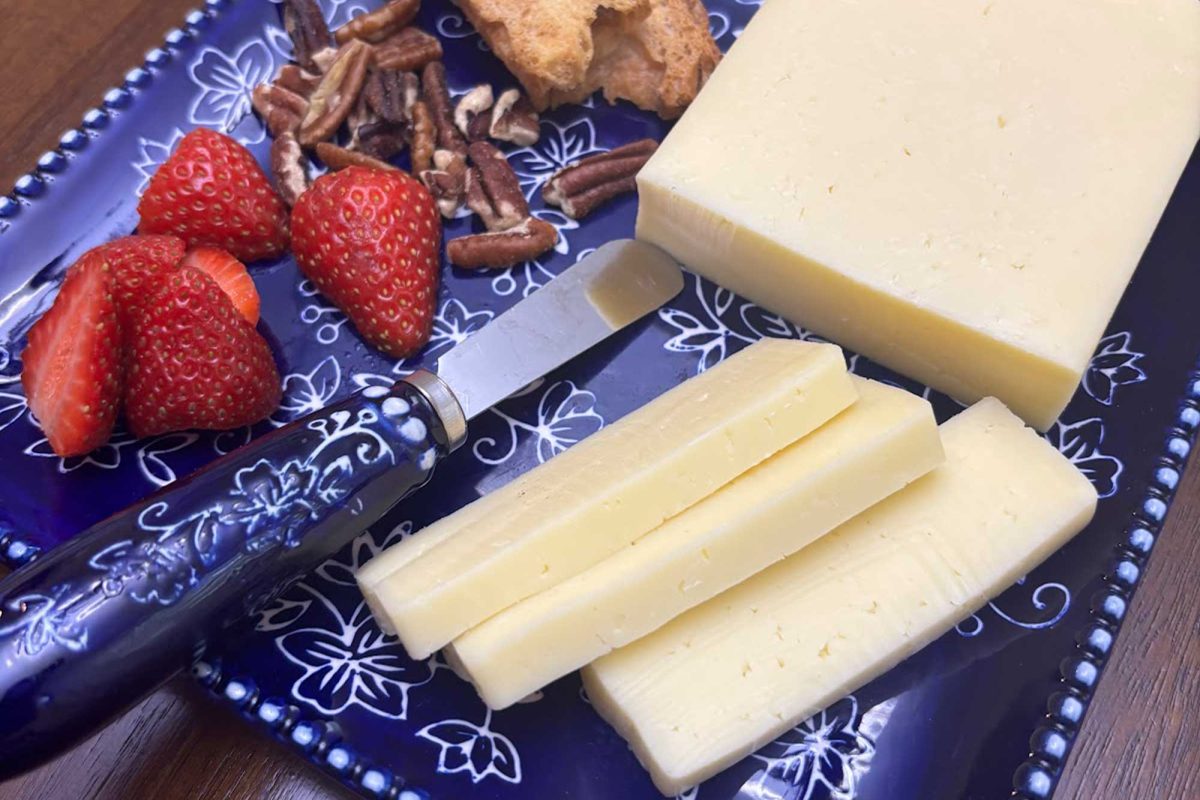
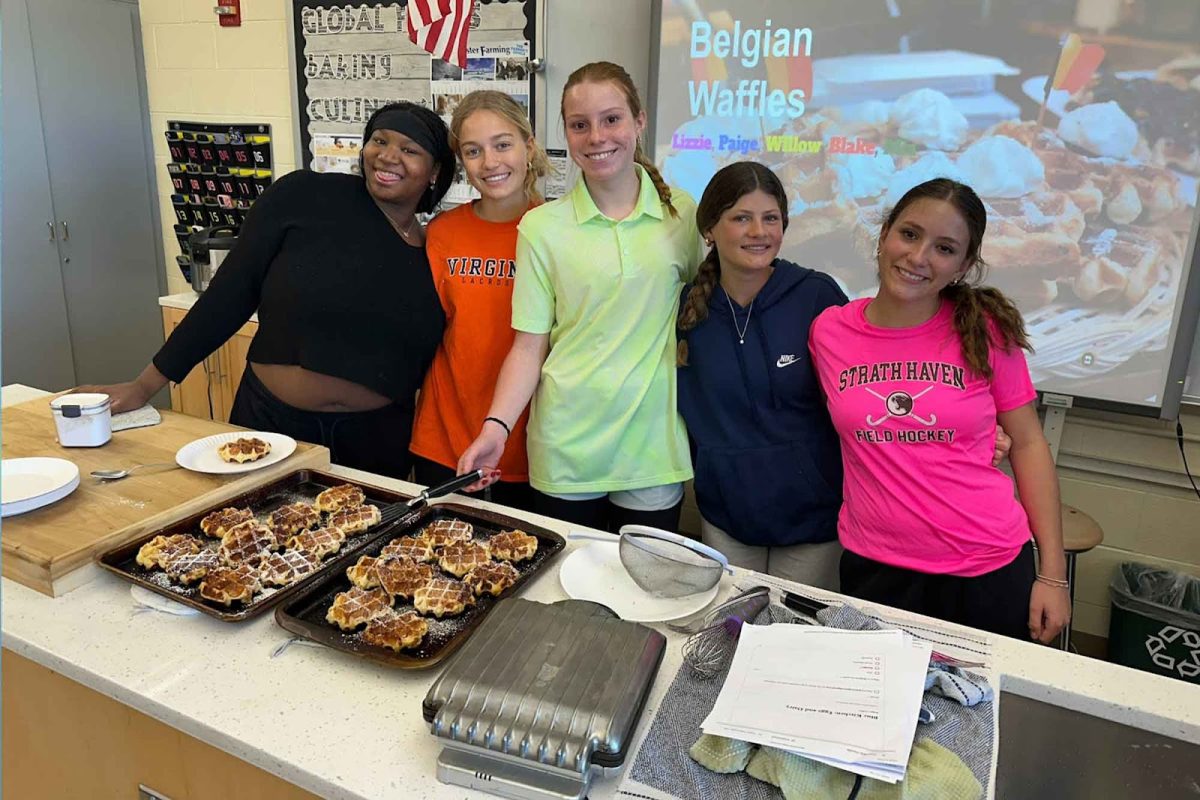
Global Foods teacher Ms. Jennifer Zanoni has always had a love for cooking, which shows through her passionate teaching.
“[Being a chef] is all I’ve ever wanted to do since I was three,” Zanoni said. “I absolutely love it.”
Global Foods is a semester-long course that is open for anyone to take, with no prerequisites. However, Zanoni recommends that students take a prior culinary course.
“I will say that [global foods] is the most challenging culinary course,” Zanoni said. “If you have taken [a prior culinary course], you will be more successful, and that is simply because we jump in pretty quickly.”
Like other culinary courses, Global Foods involves hands-on cooking. However, it offers students much more freedom, especially with recipe selection, the cooking process, and the results.
“One skill that [students] learn more in this class than in other culinary classes is improvisation,” Zanoni said. “In other culinary classes, every little, tiny detail is given to them. They even annotate recipes before they do it, so everything should look identical to the kitchen next to them. In Global Foods, you have to think a little bit more on the fly, and I love that [the students] get to taste, explore, and change as they go.”
Students enjoy the interactive and rewarding environment that the class brings.
“I think Global Foods is different [from other electives] mostly because it’s really hands-on,” junior Tilly Gebhardt said. “And I would say it’s really satisfying, because, a lot of times, in electives, you’re not going to exactly see the impact of the stuff you’re learning, but in Global Foods, you learn how to make something, you learn about a culture, and you immediately can use it and apply it in the class.”
Starting with fruits and vegetables, students go through a variety of culinary units.
“We’ll do a poultry unit, a soups and stocks unit, a meats unit, a pasta unit, etc., and within every unit, the high school students are selecting recipes from around the world that fit that unit,” Zanoni said.
Throughout the class, there are different challenges set for students.
“After we learn about fruits from around the world, we will have a fruit competition where students cook different types of food from different countries that have fruit or vegetables in them,” Zanoni said.
There is a competition for every unit, and at the end of each competition, three judges come in and grade students based on taste, execution, knowledge of the region, and their presentation skills.
“With every competition that students win, they get an incentive for their food truck final, which is when they have to create a food truck with a menu and a business,” Zanoni said.
Students not only learn about cuisine, but they also learn about business.
Zanoni’s Global Foods class works with Ms. Gianna Harris’s marketing classes to create a collaborative food truck plan, which allows the students to learn all aspects of culinary arts, from the business side to the culinary side.
“[The most challenging] part of the class was probably the budgets for the recipes when you’d have to make your own dish,” freshman Maggie McDermott said.
Freshman Nadia Blum hopes to take the class in the future.
“A lot of my friends [take this course], it sounds really fun,” Blum said. “I think learning how to cook is a useful skill, and also a great way to learn about the different cultures of cuisine.”
For Zanoni, culinary arts go beyond the kitchen.
“I think it’s so important to embrace culture, and [Global Foods] is a really good opportunity for students to see it hands-on and get that first experience,” Zanoni said. “ And I love that you guys all learn from textbooks and everything, but to be able to do it yourself and then try food is, to me, the number one way to learn about other people.”