AP Psychology is a trending class at Haven, filling with students who are curious about how the human mind works and the study of our behaviors.
The course draws a wide range of students. Although it is a social studies class, it is also a melting pot of many departments.
“There’s something for everybody,” AP Psychology curriculum creator and social studies teacher Mrs. Amanda Lawson said. “There’s science, there’s a little bit of math. There’s psychology, there’s a social science, anatomy, and physiology piece to it.”
This approach makes AP Psychology unique, adding a style of learning that improves students’ understanding and engagement with the material, setting a solid foundation for future classes.
“It’s definitely a good beginning [AP class], because it’s very interactive,” junior Ben Burnheter said. “Mrs. Lawson makes the class teach itself almost.”
AP Psychology is a common footing for students as they start thinking about enrollment in AP classes.
“I love teaching it, because it’s often the first AP course for a lot of kids, or it’s sometimes the only AP course that kids will ever take,” Lawson said. “It’s a very big mix of kids.”
The course intersects with current conversations about mental health. Lawson noted that greater transparency around mental wellness has encouraged students to explore psychology.
“Because our discussions around mental health are much more open than they ever were before, more kids are thinking about, ‘Hey, what is my mental health? What is good mental health, what’s bad mental health, how do I get this way?’” Lawson said.
A perk of taking the class is being able to apply the material in real-life scenarios.
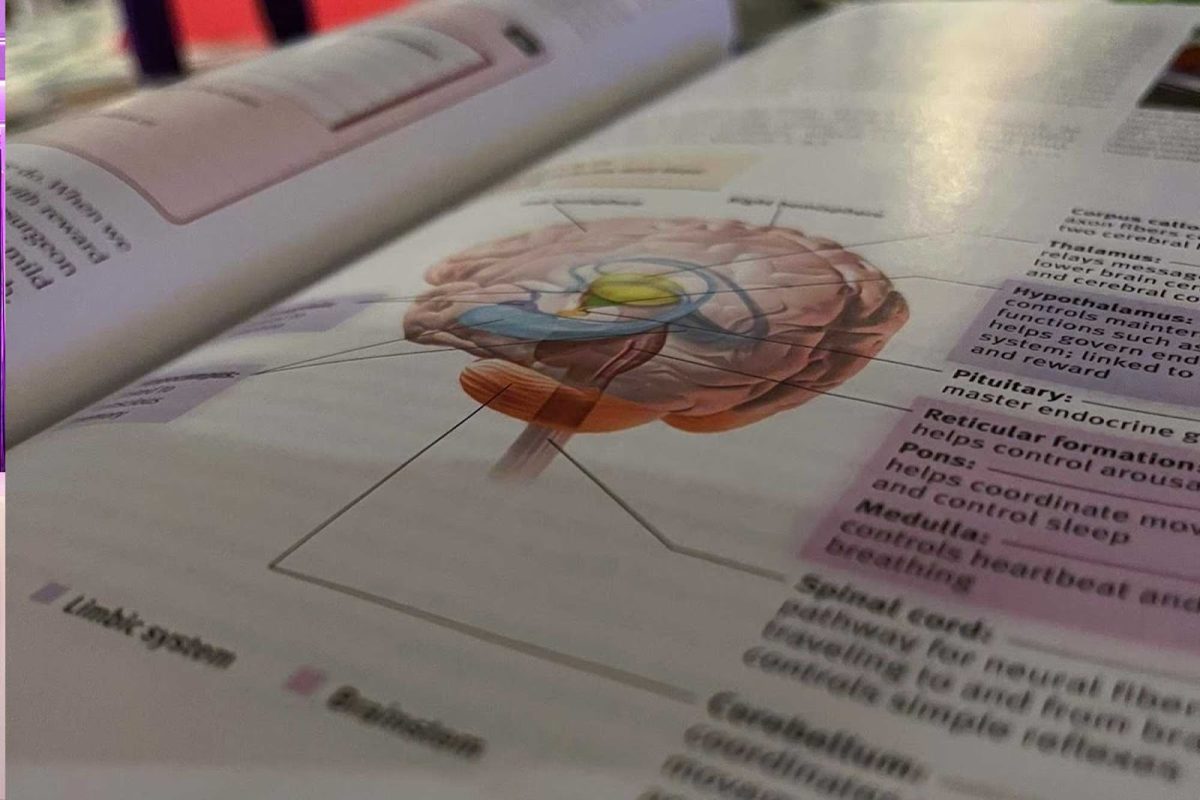
“We learned about the neurotransmitters in the brain,” current AP Psychology student and sophomore Mae Valcich said. “So if I’m getting tired, I’ll be like, ‘Oh, my body’s releasing norepinephrine so that I can stay awake.’”
Hands-on learning is also part of the class, helping students visualize and remember material.
“One time, we put together a little plastic brain,” Valcich said. “We got to see the actual parts, and had to try and fit them all in.”
Lawson aims to prepare students for college-level expectations by creating a more independent, rigorous environment.
“I think some kids don’t love that part of the course, and don’t love me for that,” Lawson said. “But I think I’m building a work ethic, and some skills for the future.”
The pace can be brisk: students cover extensive material before the AP exam, although many still find it attainable.
“I think that it’s a good combination where you’re being challenged a little bit, but it’s very manageable,” Valcich said. “You just have to put in the effort and put in the time.”
Lawson’s teaching well-prepares the vast majority of her students for the AP test, as Haven annually scores above the national average in the various test categories.
“[Lawson] taught everything and probably more than what we actually needed for the exam,” Burnheter said. “We had everything we needed for the AP test.”
Psychology also opens doors to many career paths. Lawson adds that psychology is a fast-growing profession.
“One of the things I like to do in class is talk about the different kinds of career paths that you can take with psychology, that’s not just sitting with a client as a therapist,” Lawson said. “That’s a great career, but there are other things you can do with psychology in lots of different ways.”
Ultimately, AP Psychology offers both challenge and insight, helping students understand themselves and the world around them.
“I really enjoy being in class, even the days when we are just doing lectures,” Valcich said. “It’s really fun, and it’s interesting to learn about everything.”