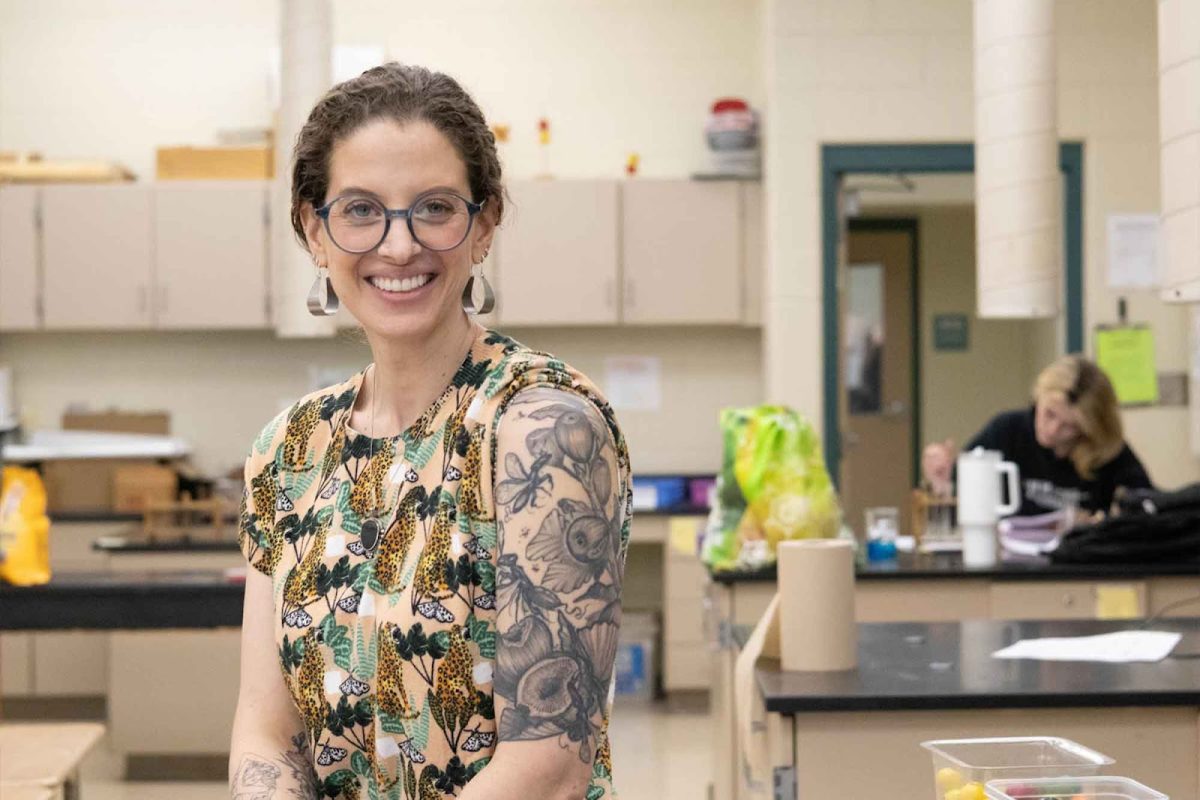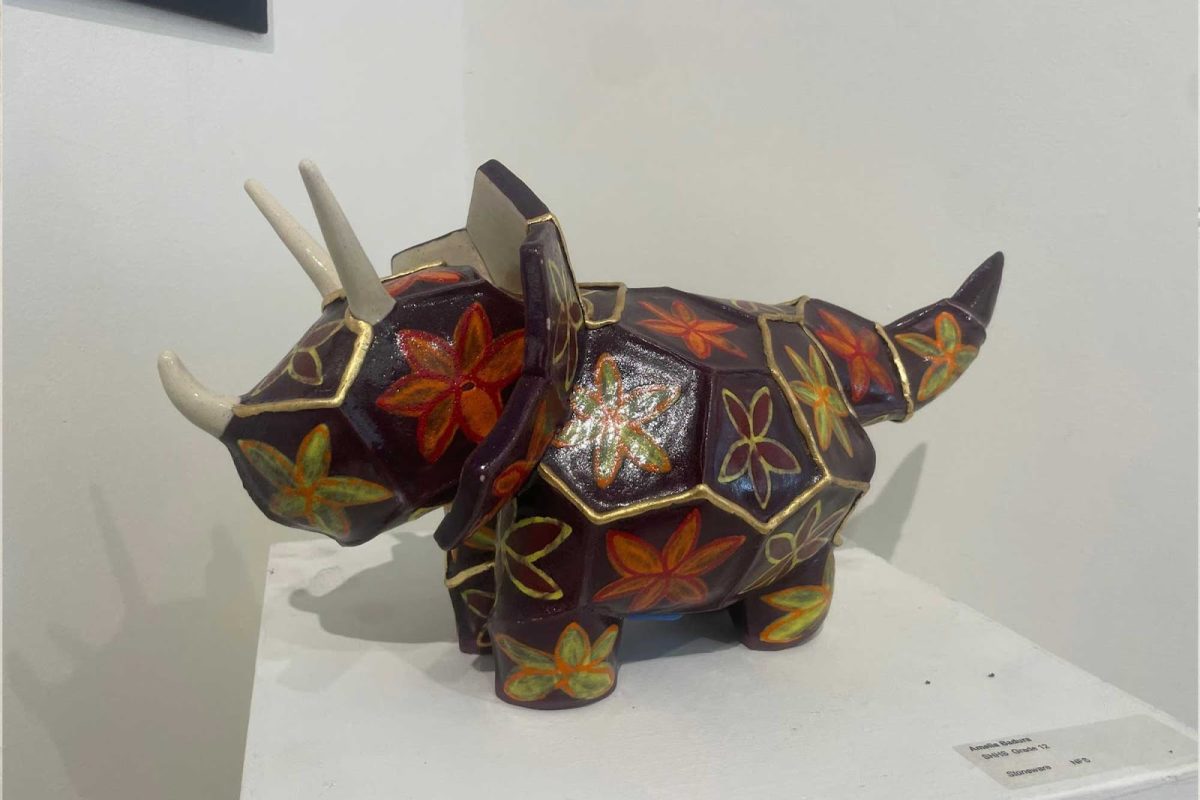

The earthy smell of clay fills the room where students sculpt, throw on the wheel, and glaze. Mr. Scott Rodgers’ room is a space for creativity, independence, and hands-on learning — key components of the AP Art and Design 3D course.
AP Art and Design 3D is a year-long course designed for experienced ceramics students who have completed Ceramics 1, 2, and 3. Unlike most classes, the curriculum is driven almost entirely by the students themselves.
“The biggest difference is the independence that is present in that curriculum,” ceramics teacher Mr. Scott Rodgers said. “The actual assignments in AP [Art and Design 3D] are completely student-generated.”
Because of the freedom present in the course, students must demonstrate skill and ability before entering the class.
“They need to know how the studio works,” Rodgers said. “You can’t just jump into AP. You need them to have a certain level of maturity to be able to handle the class.”
Unlike most AP courses, AP Art and Design 3D does not end with an AP exam — instead, students submit a digital portfolio to College Board built around a “Sustained Investigation,” a body of work connected by a theme.
“The pieces in the portfolio have to have some sort of commonality built into them,” Rodgers said. “That could be structural, it could be functional, it could be purely aesthetic; how the pieces relate is completely up to them.”
For senior and AP Art and Design 3D student Dylan Ching, that freedom has allowed him to experiment beyond the foundations he built in earlier ceramics classes.
“In Ceramics 1 and 2, my focus was really on small details,” Ching said. “Now, I’ve been experimenting a lot with my artistic style. I’ve really been inspired by ancient Chinese bronze, like incorporating organic themes and animal shapes.”
Ching believes that choosing a theme is both the most challenging and rewarding part of the process.
“[The hardest part is] definitely just figuring out how you want the theme of your portfolio to be,” Ching said. “It’s the toughest part, but it’s also the most fun.”
Senior and AP Art and Design 3D student Lilah Santore has taken an emotional approach to her projects, creating pieces that reflect mental health and vulnerability. One of her sculptures features a face hidden behind a set of hands, while another resembles a crumbling tower.
“I’m going to make [the tower] torn apart to show depression, and how it tears you apart,” Santore said.
While the class offers independence, there is also a big resistance piece to it. Clay can dry out, glaze colors can shift unexpectedly in the kiln, and hours of work can disappear in moments.
“When you’re finishing something, it could just break in the kiln,” Santore said. One step could go wrong, and then the entire thing’s gone; you might have to restart. So you have to actually put in the time and effort.”
Santore appreciates the structure of the class, allowing her to do her work at her own pace.
“I have creative liberty in everything,” Santore said. “I can make whatever I want, whenever I want. It’s no stress. When I need something, Mr. Rodgers is there, and when I don’t, he leaves me alone and lets me do that work.”
Rodgers sees his role in the classroom as a guide through critique and refinements, instead of directing projects.
“They know what’s good. They know what sucks, ” Rodgers said. “They know what it means to put hours into a piece.”
This balance of both independence and support has shaped students’ growth over time.
“I was awful my freshman year,” Santore said. “But I made a face the other day…and I was like, ‘Oh my God, that looks like an actual person’s head!’ You don’t think you’re ever going to get better. But looking back…there’s just so much change.”
For Ching, that growth is directly tied to Rodgers’ mentorship.
“He definitely pushes me to try to see things from a different perspective,” Ching said. “He’s inspired me to pursue ceramics as a hobby.”
At Haven, AP Art and Design 3D offers a peaceful end to a busy day.
“Oh my gosh, it’s so much fun,” Rodgers said. “What a nice way to end your day, to have a creative outlet, and to bust up the stressful day, here at ‘Stress Haven.’”