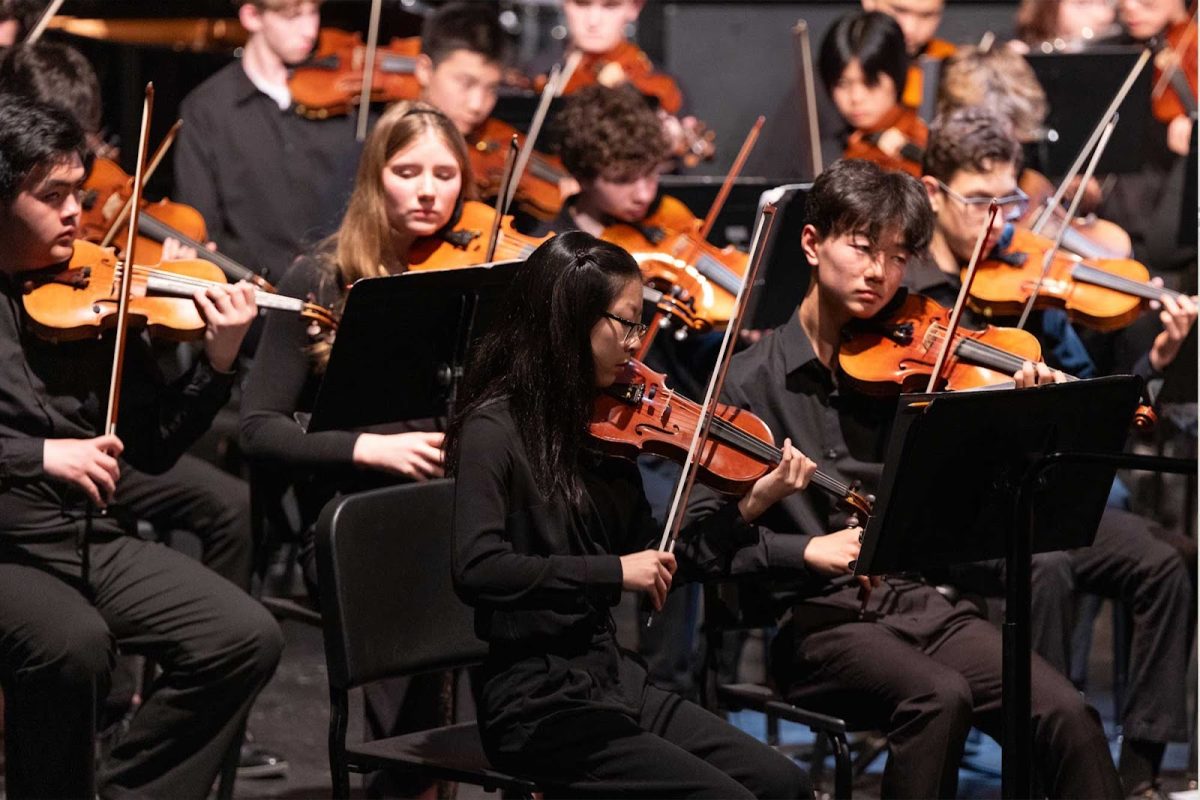

Since August, music students who missed fifth block classes had to fill out several forms and take make-up lessons at lunch. Around a month ago, a new assignment was introduced called “Missed a Beat.”
Known as a “MAB,” the new assignment requires students to send in videos of themselves playing or singing whatever was taught in the lesson that they missed. Unlike the attendance forms, which just have students provide an explanation and teacher confirmation for their absence, MAB makes sure the students actually learn what they missed.
In the past, attendance has been recorded by administrative assistant Ms. Lynn Chadwick. Next school year, that will no longer be happening because of staffing changes in the district, meaning the music department had to come up with a new way to keep track of attendance.
“Mr. [Nicholas Pignataro] and I [are thinking], ‘How can we innovate this in a way that A) helps with the attendance workflow, but B) actually is better educating the children,’” choral director Ms. Lindsey Reinhard-Silva said.
Many students miss fifth block rehearsals because of other music commitments, as well as clubs, and getting help from teachers. Freshman Eleanor Roberts has done several MAB assignments already.
“It is a little more work, but I think that it’s helpful in that you don’t have to do all the emails and confirmation of the emails and stuff,” Roberts said.
MAB’s purpose is to help kids feel confident in their music without making them miss other commitments they care about.
“Our goal is that because it’s a class and it’s a community, you will want to be here, and I think most people do, but because fifth block has so many demands on kids’ time, it’s supposed to kind of help people prioritize,” Reinhard-Silva said.
If students have missed the class for another music ensemble, they are exempt from MAB. While students understand the idea behind the new practice, it can cause more stress on top of an already packed schedule.
“The fact that you have to do an assignment within two days [is] kind of inconvenient, because you have to go and get your folder and actually sing and record yourself,” freshman Stella Rich said.
MAB also requires students to fill out a form after the work is completed, which makes it easier to forget since the students feel like they’ve already completed their attendance make-up.
“Some people don’t have the time to spend thinking about an MAB assignment,” Rich said.
Freshman Sinaan Maqbool agrees with Rich and prefers the old forms and make-up lessons.
“You could at least do [make-up lessons] with another teacher, and you could actually learn and get better,” Maqbool said. “When you’re doing it by yourself, I feel like it’s pretty useless. You can’t learn from yourself.”
Even with the new policy, students will still have make-up lessons if they miss two classes. Make-up lessons not only teach the students music, but they also help form connections between administrators and kids. They will now also be helpful if students have issues with their MAB work.
“I can confidently say that I have a great connection with every single kid in the choral program, mostly because of make-up lessons,” Reinhard-Silva said. “It really gets down to the nitty-gritty of their music-making capacity, so make-up lessons are still here to stay, and can help you with any further questions that might happen.”
Though MAB was only introduced in March, the music department staff have already noticed the impact it’s making.
“I think it’s been hugely effective. Number one, my grading feels so much more fair, because it’s just based on student work, and it’s a lot more streamlined for people to follow. It’s just, ‘I missed, I do MAB,’” Reinhard-Silva said.
Although the staff and students have mixed reviews on MAB, the assignments have only existed for a little over a month, so opinions may change with time.
“It’s something that both Mr. P and I are excited about bringing to the music department, because it really streamlines the process for us and the students,” Reinhard-Silva said. “It also increases their actual learning capacity, which is kind of the biggest deal.”