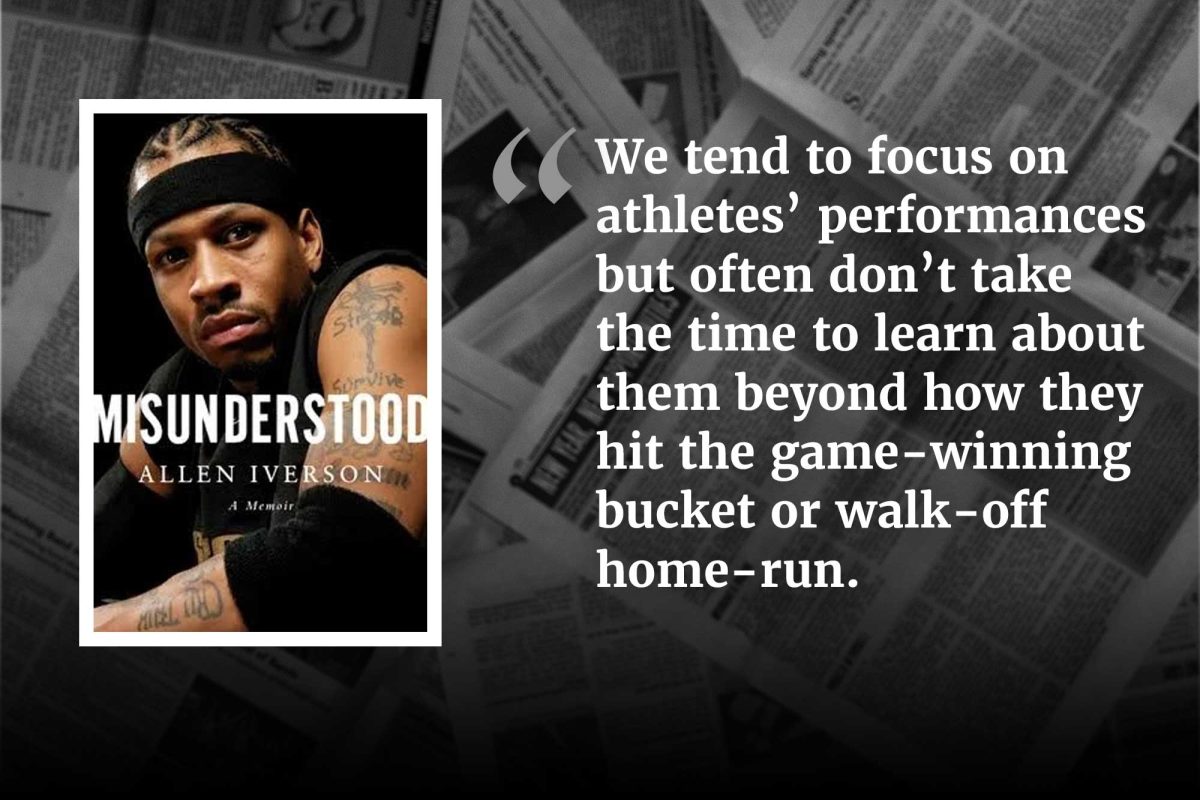
When you hear Allen Iverson’s name, what do you think of? Before reading this book, I thought of one of the best Sixers players of all time — he was the answer to the Sixers’ consistent losses that they were looking for. I thought of his iconic step over against the Lakers in the NBA Finals.
Maybe you thought of one of the most replayed press conferences when he had his famous “practice” rant. Maybe you thought of an 11 time all-star, MVP, Hall of Fame player.
What I bet you didn’t think of is the hardships he faced growing up and throughout his career.
When I saw this book at the bookstore, I realized that I could recite facts about Iverson’s career, but next to nothing about his life off the court. Iverson opens up the curtain to reflect on the challenges he faced and the people who helped him become “the answer” to the Sixers problems.
He writes in a captivating manner, sharing stories that makes you want to keep saying “just one more page.” By the end of the book, I felt like I viewed him from a new perspective and am better able to understand the decisions he made throughout his career.
I’m glad he began the book by telling us about his childhood. This helped me visualize how he was raised and how that affected the decisions that he made. It made me realize that when we judge someone, we often don’t know everything about their life and that life can be really complicated.
Iverson grew up in an impoverished Virginia neighborhood, with his two younger sisters and 15-year-old mother. I thought it really powerful that he shared information about what it was like where he grew up because it gave us a deeper understanding of who he is.
We tend to focus on athletes’ performances but often don’t take the time to learn about them beyond how they hit the game-winning bucket or walk-off home-run. When they aren’t performing on game-day, they get heavily criticized.
I thought Iverson balanced explaining the struggles he faced with his achievements, connecting the ways in which they both played parts in his development as a person really well. This background knowledge on Iverson made me curious about what goes on behind the scenes for other athletes.
Another aspect of the book I enjoyed is Iverson’s discussion about his journey in sports. He started off playing football, but then focused on basketball when he saw his potential in the sport. His mom told him when he was young that he could make it into the NBA or NFL if he wanted and he took that to heart and proved his mom right. I thought it was inspiring to read about how much of a difference her belief in him made. There are so many parents, teachers, and coaches whose belief makes a huge difference in kids’ lives.
Throughout the book, Iverson emphasized the ways in which his friends kept him out of trouble, reminding him of his potential in sports.
One event that stuck out to me was when Allen Iverson was falsely accused of starting a fight in a bowling alley, getting him arrested and locked up for the entirety of his senior year. I thought it was really interesting to hear about the racism that he faced even though he was a breakout athlete in high school.
Because of this one man’s decision to lie, it had a devastating effect on Iverson’s life. His offers to play basketball at top schools vanished, leaving him feeling hopeless. While he was in jail, his friends and family tried to appeal the conviction multiple times and reached out to the governor to release him.
Finally, Governor Wilder of Virginia ordered his release because he was convinced that Iverson had been treated unfairly. I appreciated the loyalty of his friends and how they never gave up on him.
I learned a lot about the impact college had on his life. Georgetown University’s head basketball coach, John Thompson, may have saved Allen Iverson’s life as they formed a strong relationship, giving him Iverson the structure he never had as a kid.
After getting to the NBA, Iverson quickly became one of the most controversial players in the league because of his style and attitude on the court.
Taking the time to read this book and learn Iverson’s thinking about decisions he made such as this, taught me the importance of asking questions and not being quick to judge without taking the time to learn about someone’s customs.
For Iverson and his community, wearing a suit was meant for funerals and weddings. Iverson does a great job giving his perspective on this, showing why he made the decisions he made.
One of the most powerful chapters in the book was when Iverson addressed the interview where he went on a rant, questioning why the reporters were focused on practice. This interview was very controversial, sparking a conversation about how selfish he was.
I learned that Iverson’s best friend had died about seven months earlier, and the press cut out the second part where he gets more serious addressing this. At this time, there were rumors of a trade, and he had just gotten news that he wasn’t being traded.
Going into the interview, he expected to address that. Instead they asked him about practice. Before reading this book, I thought this interview was funny. Now, I realize how misunderstood he was and judged he was.
Overall, I appreciated how each chapter focused on a different part of his life but still told his story in a way that made sense chronologically. I wish he wrote more about his professional career. He spent less time talking about it compared to other parts of his life.
Despite this, I really enjoyed learning about his life and the new perspective that he provided. Moving forward, I think it’s important that we get to know more athletes as human beings, before judging them only on whether they made that game-winning bucket or walk-off home-run. Once you know “the answer,” some of Iverson’s actions seem a lot less controversial.