
Sprawling fields sprinkled with small villages set the background of medieval England. Stone castles are fortresses protecting against wars. There are peasants working in fields, knights fighting for kings, and… love affairs?
The legend of King Arthur is made up of varying stories, one of the most prominent being the love story between King Arthur, Queen Guinevere (King Arthur’s wife), and the knight Sir Lancelot. In the story, Guinevere and Lancelot fall for each other and have an affair.
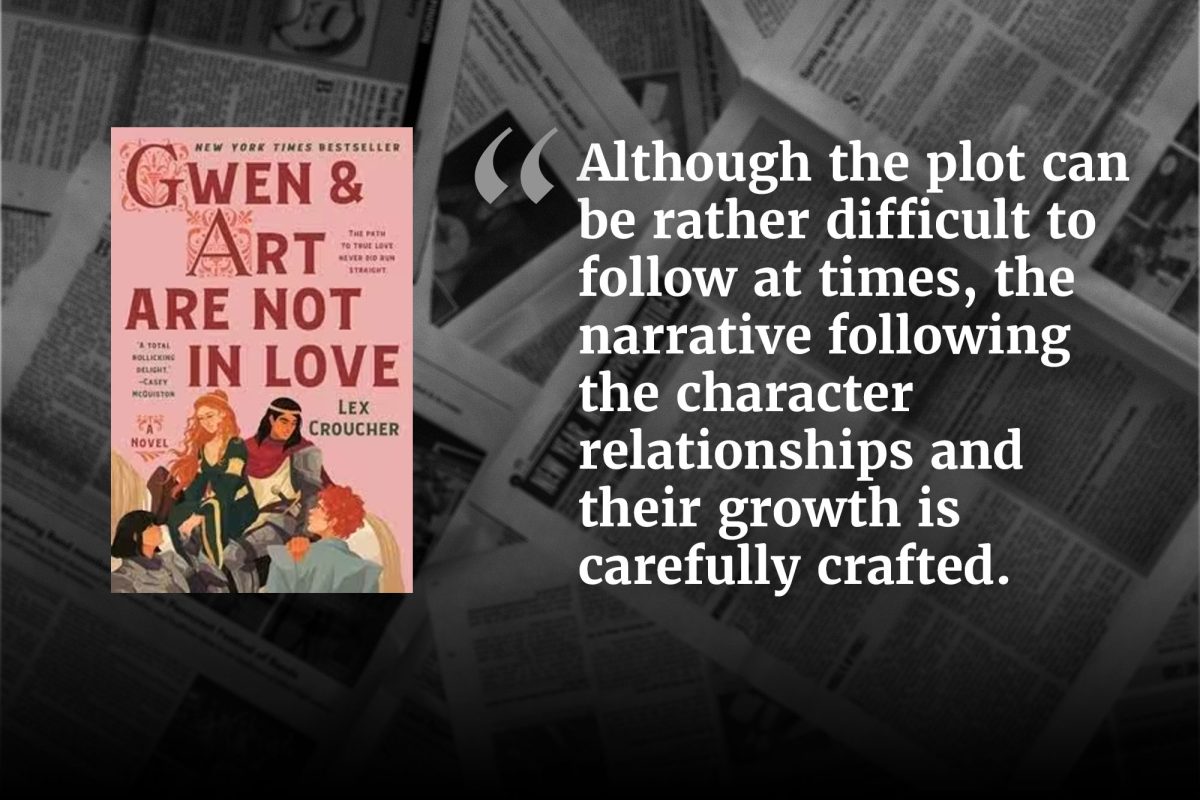
The book “Gwen & Art are Not in Love” by Lex Croucher takes place hundreds of years after King Arthur’s time, and follows a similar plotline. The story follows Arthur, a nobleman and descendant of King Arthur, and his betrothed, Princess Gwendoline (Gwen for short); however, they both have separate romantic interests from the start.
Arthur and Gwen’s relationship is rocky to say the least, so a romantic relationship was always out of the question for them. However, this changes when they both discover that the other is queer. They decide to team up to help cover for each other, allowing them to pursue their romantic interests.
One aspect of the book that I enjoyed is that the character relationships develop nicely as the plot unfolds. At first, Gwen and Arthur do not like each other, which is shown through their dialogue and actions. Instead of staying like this throughout the book, their relationship is dynamic. This allows them to grow and change because of each other, which is reflected in their interactions.
Additionally, the friendships between characters provide a breath of fresh air from the serious aspects of the plot. One such friendship is between Arthur and his bodyguard, Sidney. Sidney adds comedy to the story and the boys challenge each other in their friendship (though not always in a constructive way).
Gwen and her brother, Gabriel, also have a pleasantly written relationship as siblings. They help each other to follow and achieve their goals, even if they disagree on some things. As a person who constantly argues with her sibling, I found it refreshing to read a book with two siblings that behave well together.
Another thing the book does well is world-building. This is the concept of creating a reality that makes sense and has coherent factors such as culture and geography.
One aspect of world-building that the book nails down is history. It often references King Arthur’s stories, time, and accomplishments. The names of characters reflect many important figures from King Arthur’s legends. The names Gwen and Arthur, to give an example, are a nod to Queen Guinevere and King Arthur.
Not only are the names reminiscent of King Arthur’s legends, some plot lines align with the stories too. For example, Gwen does not like Arthur, but she does like a knight, Lady Bridget Leclair, which is a reference to the love affair between Queen Guinevere and Sir Lancelot.
The social standards of the time is another piece of the book’s world-building that brings the story to life. Bridget, being a lady knight, faces numerous issues with sexism, as that was far from unusual at the time. Despite this, Bridget still performs highly as a knight, which is a nice show of persistence.
On the contrary, an aspect of the book I did not enjoy is how the plot of the story plays out, specifically with the political aspects. As Gwen and Arthur both have high spots in politics, it makes sense that the book focuses on political issues. However, the main points of the political-based story happen right at the ending. Hints about the ending appear in earlier sections of the book, but the ending feels rushed and confusing.
Although the plot can be rather difficult to follow at times, the narrative following the character relationships and their growth is carefully crafted. “Gwen & Art Are Not in Love” is a perfect read for anyone wanting to escape into a different world. The book immerses readers in a distant land of romance, war, knights, and nobility.