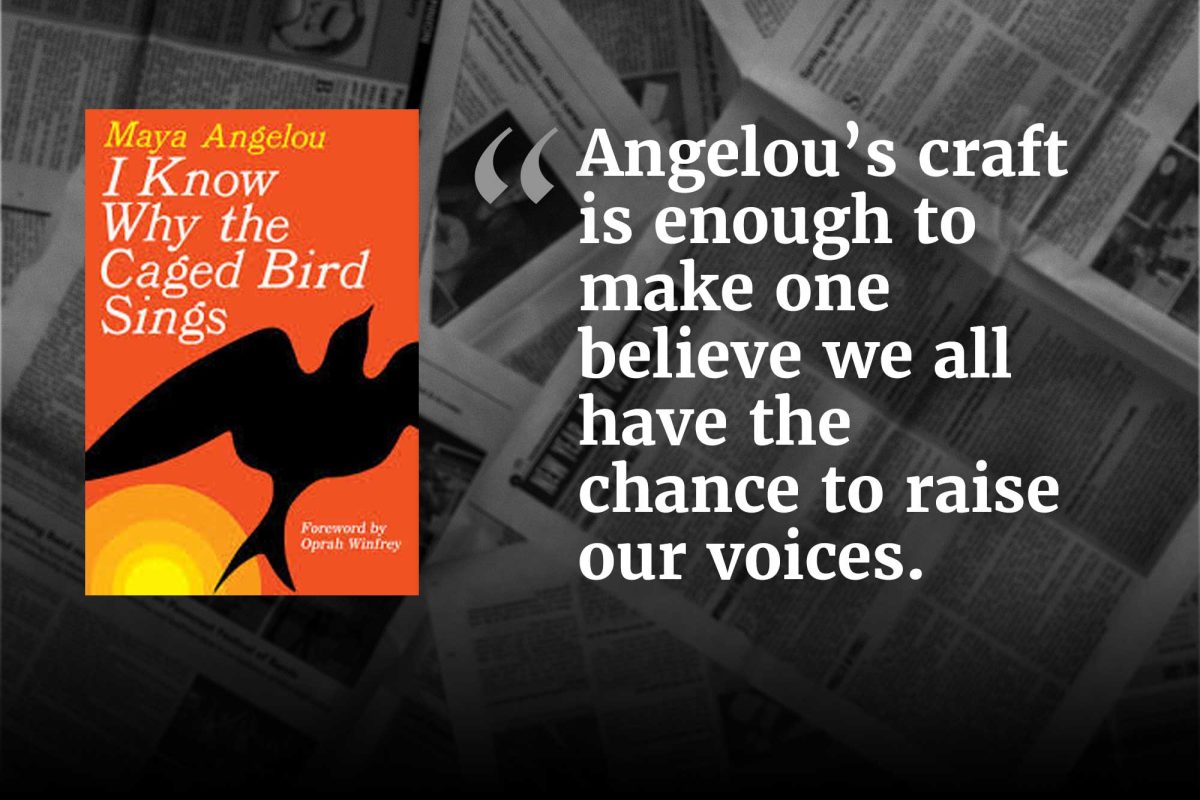
Deep in the heat of Stamps, Arkansas, one of the greatest creatives of our time found her wings. Maya Angelou’s beautiful account of youth is one that you simply can not miss.
In her memoir “I Know Why the Caged Bird Sings,” Angelou details her childhood growing up as a young black girl amongst stark segregation and adversity. Through trials of love, hope, abuse, and prejudice, Angelou finds the voice that will go on to inspire thousands, and the journey is worthwhile.
Memoirs can be tough — I get it. It takes a very special voice to draw you into a singular life for three hundred pages. Angelou, however, has that voice.
One of the things that makes the book so powerful is how the narration feels authentically young and childlike, and not in a bad way. Angelou narrates the book as if looking through the eyes of that little girl, and the purity and liveliness of the perspective is enrapturing. The reader is reminded of a time when the world felt so small — hardly stretching past your town’s border.
This connection to the whims of childhood also creates a deep bond to the Maya of the story. In following her from grade school all the way through her teenage years, the reader can not help but feel deeply for Angelou and the rest of the characters.
The actual language of the memoir is also a greatness factor. Each line has a sort of poetic quality to it, combining striking imagery with beautiful metaphors. Even when the storylines slow, the narration never ceases in its insight and excitement.
All good memoirs need exciting plot points. While Angelou does provide a gorgeous narration, the events of her childhood that unfold truly hook the ready in. From helping at her grandmother’s store in the south to living for a month with a group of homeless teenagers in a car junkyard, it is easy to forget the story is completely nonfiction.
Finally, the book gives an interesting view into the state of the United States from 1930-1940, particularly considering the Great Depression and WWII. Culturally, the audience is able to get a taste of the rich culture of black communities in the South, and later on, explore the innovation and unification that was happening in San Francisco.
All in all, “I Know Why the Caged Bird Sings” elicits emotion with every line, and left me thinking. Angelou’s craft is enough to make one believe we all have the chance to raise our voices.