
Walking through the hallways of Haven, there are phones everywhere. They’re used for taking pictures, looking things up, communicating with friends about meeting up for lunch, or texting parents for rides home.
Senate Bill 1014, a state bill that passed 46-1 on Feb. 3, proposes that phones should be banned for the entire school day in Pennsylvania schools. The bill is now under consideration in the House of Representatives.
“The intent of [the bill] is to have a bell-to-bell ban for schools in the state of Pennsylvania,” principal Mr. Andrew Benzing said.
The current phone policy at Haven, WSSD Policy 237, only bans phones during class. But if the statewide legislation passes, that ban would extend to during lunch and in the time between classes.
However, the proposed bill leaves it up to school districts to decide how to enforce this, which could pose problems for Haven.
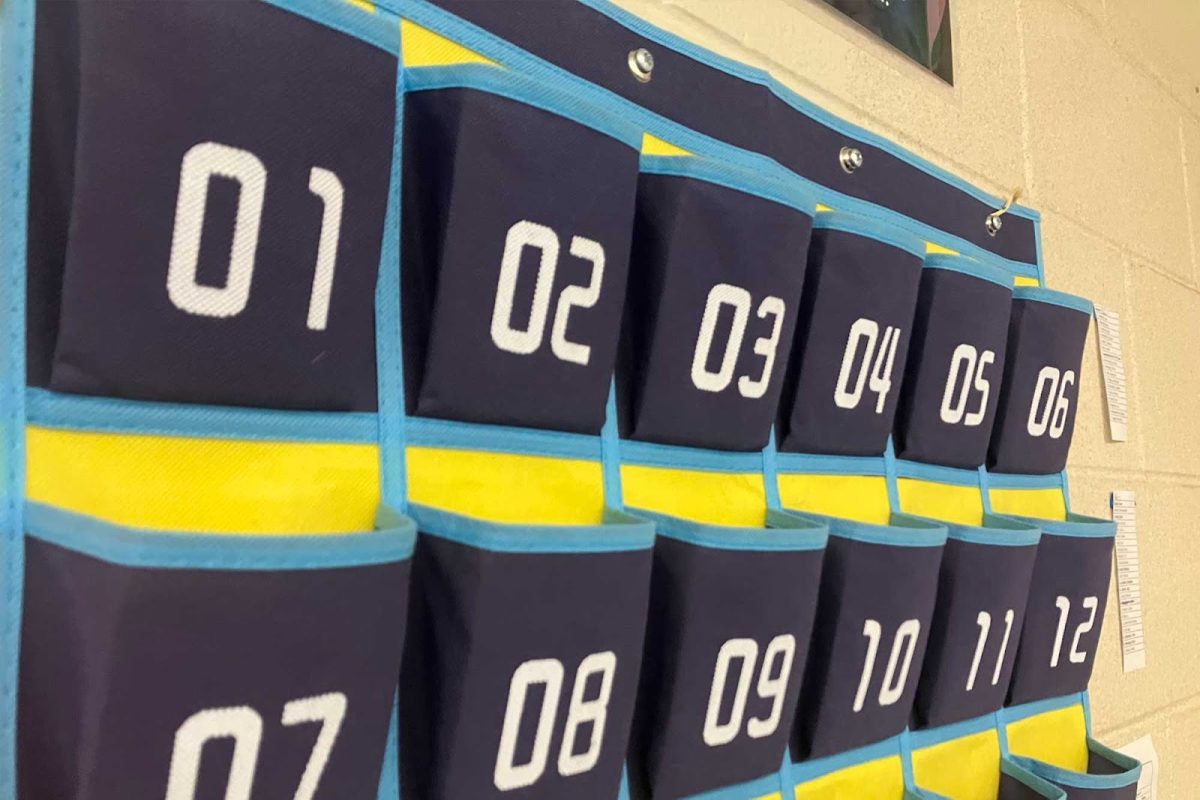
“One of the things we kicked around was that phones would get deposited in your first block class, stay there, and then you come back, and we’ll have a return period, an advisory period, or some reason to bring them back to their first block where they would go,” Benzing said. “But there are a lot of challenges even with that.”
The bill isn’t guaranteed to pass, and if it does, it would go into effect for the 2027-28 school year. This means it would likely only affect the current freshman and sophomore classes.
“It has a lot of energy,” Benzing said. “It’s gotten further than I thought… I think when it gets to this stage, usually with these types of things, they slow down quite a bit, because the real questions come up about, who are we going to pay for this? How’s this going to impact [us]? But [that] hasn’t slowed it before.”
This potential change comes after only one year of our current phone policy, which students are still adjusting to.
“I don’t think it’s 100% effective,” sophomore Sophia Weinstock Coulson said. “People will still try to take their phones, or won’t put them up.”
Others have shared the sentiment that the phone policy doesn’t fully solve the problem of phones in school, and that there might not be a good solution.
“[The current phone policy] works to a point, and I feel like it’s better than what a lot of other schools do, with the pouches that they had, but I don’t think there’s much that the school can do as a whole,” freshman Giuliana Brigandi said.
Benzing agrees that the current phone policy can be improved and thinks that the school can fix the issues.
“There’s still work to be done outside of the classroom,” Benzing said. “For example, when we see students going from class to the bathroom, they bring their phones with them, and that’s really wrong for a lot of reasons, including that it’s disgusting, but that’s something we’re working on.”
With the bill, students would not have any access to their phones throughout the day, and thus not be able to take their phones with them to the bathroom. While the bill could fix that problem, Benzing believes that it could cause issues for students.
“I think if I were 17 [or] 18 years old and had a job, or had sports practices, or needed to make sure I was in the right place for band, I think the phone gives me some of that information that I need, as long as I’m using it responsibly,” Benzing said. “[If the bill is passed, it is] going to be, from those students’ eyes, a setback, a limitation on what they can use the phone for.”
Assistant principal Mr. Thomas McLaughlin believes the bill could garner support from members of the school community.
“Just from what I understand as a parent myself, I think it would be supported by the community,” McLaughlin said. “Obviously, the kids would have a problem with it, but anytime you put more restrictions on something, people have an issue with it.”
Sophomore Isabel Dourte does not believe that a bell-to-bell ban would be effective.
“I think kids are just going to do what they want and [at] that point, if you tell them not to do something, like don’t bring your phone, it’s just going to happen anyway,” Dourte said.
In order for the bill to become a reality, it would need to first move out of Committee, where it currently is, and be scheduled for a vote on the House floor.
“It’s been a slow burner, from what I understand, but it’s made its way through,” Benzing said.
While no one can say for sure if the bill will pass or even get voted on, State Rep. Jennifer O’Mara (PA-165), whose district includes parts of Media and Swarthmore, said she would vote in favor of the Bill passing. She remembers being a student herself and valued the pre-phone learning environment.
“I do appreciate that our phones have created a beautiful ability to connect with one another and build community across the globe, but schools are one of the more precious places where you get to exist within a community,” O’Mara stated in an email. “You should focus on what is going on around you and learn and enjoy it in a way that can only occur without a phone in your hand.”