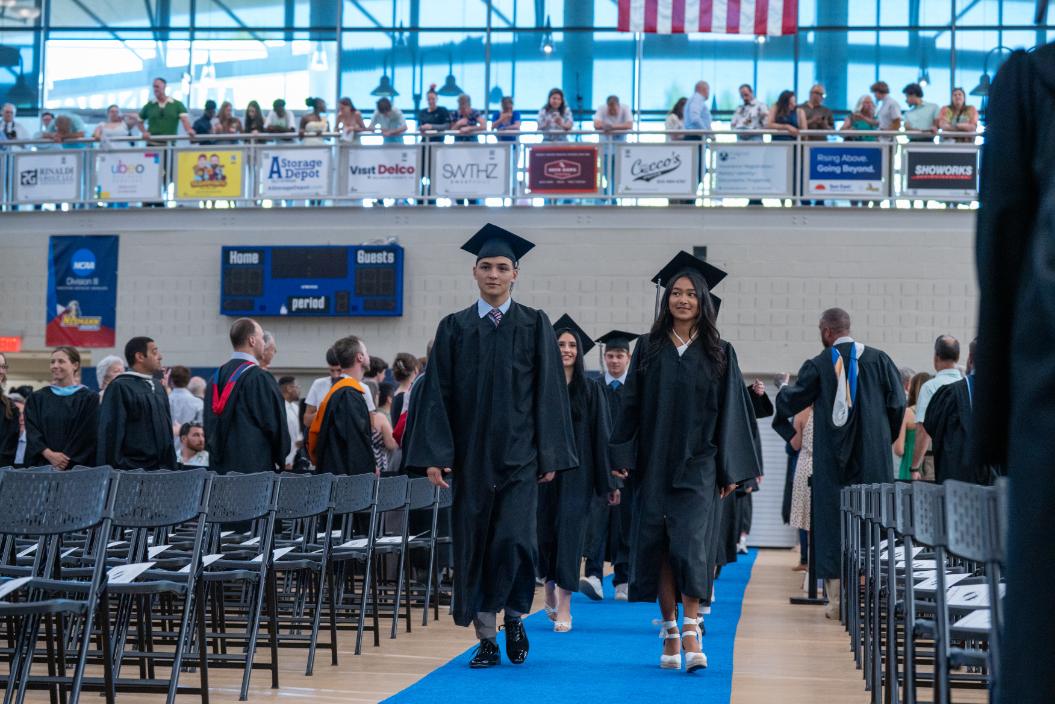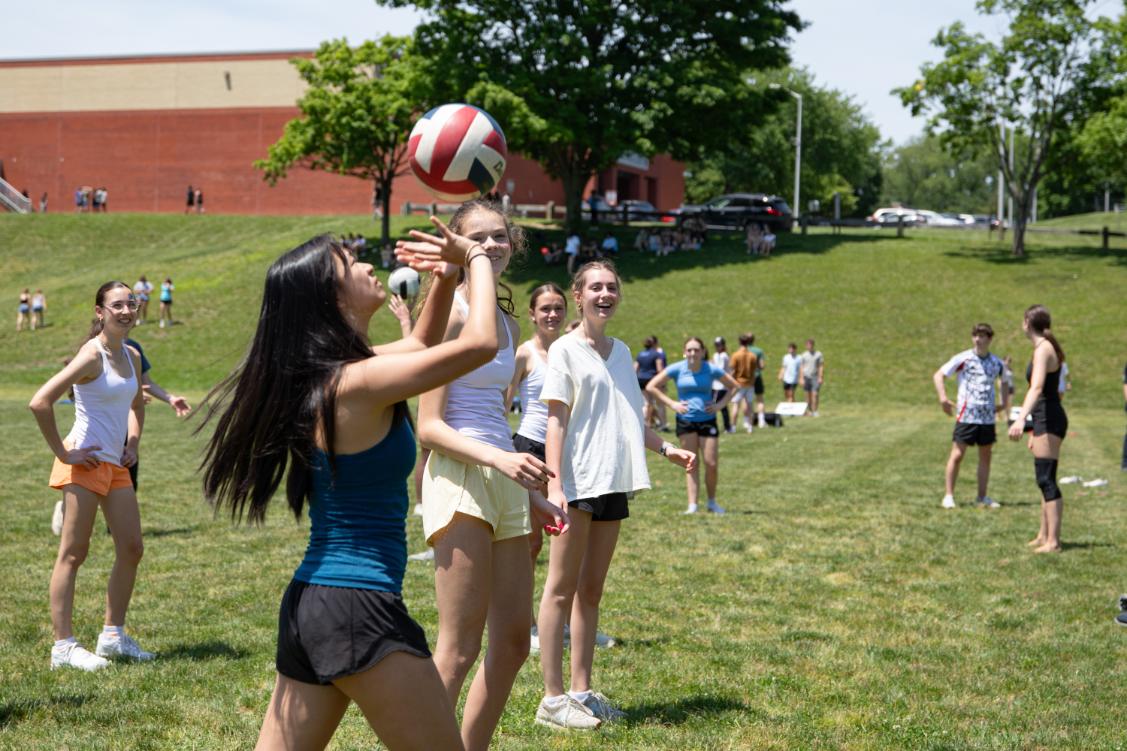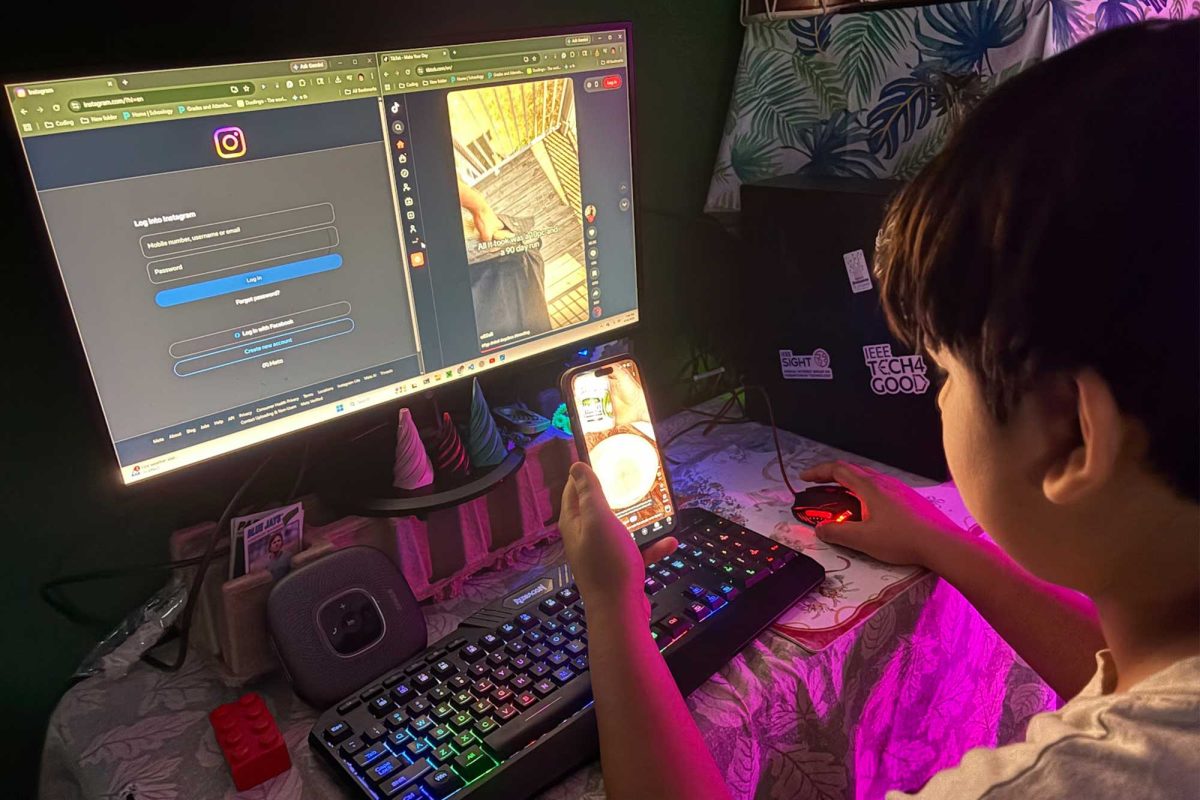

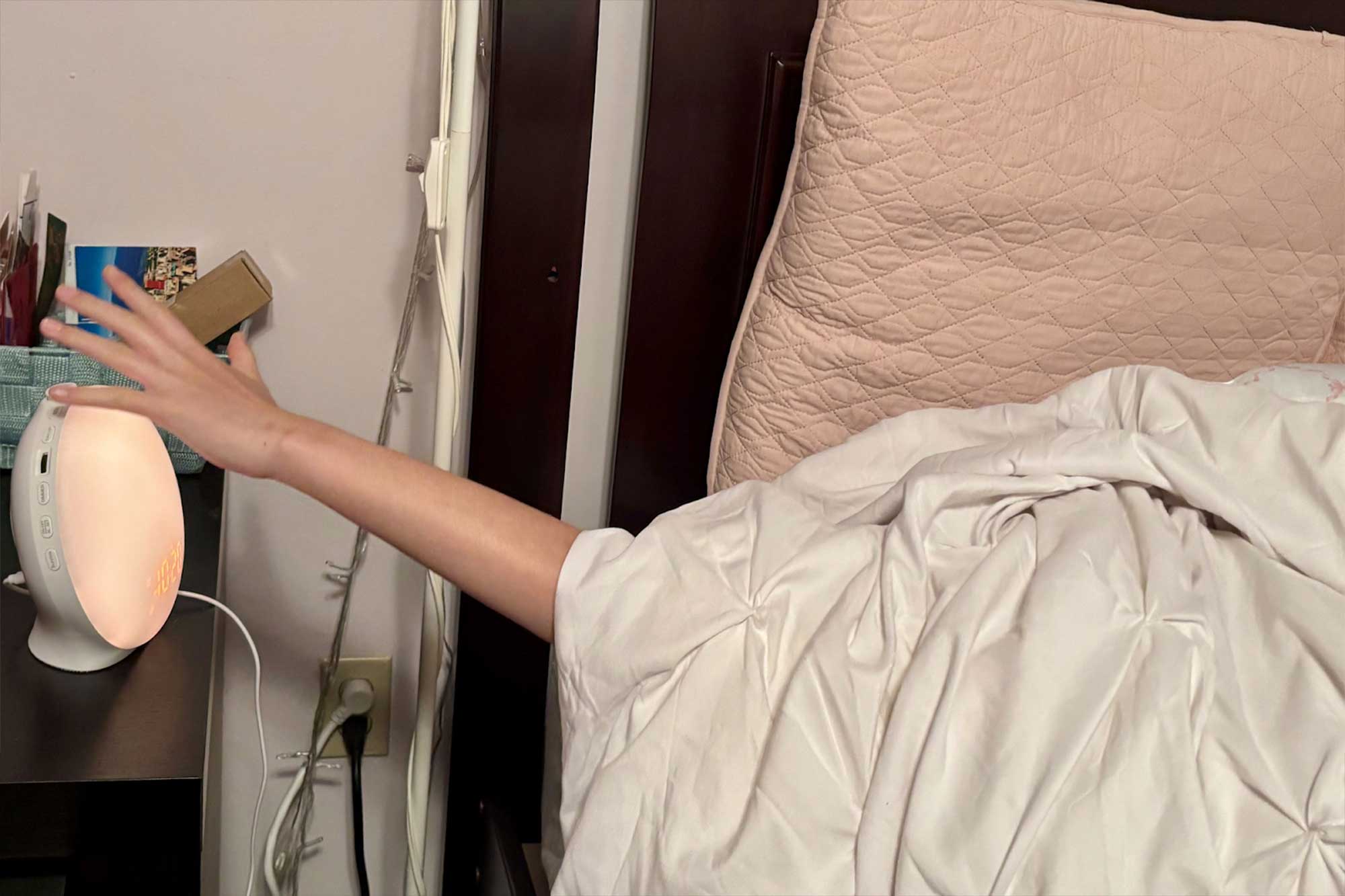
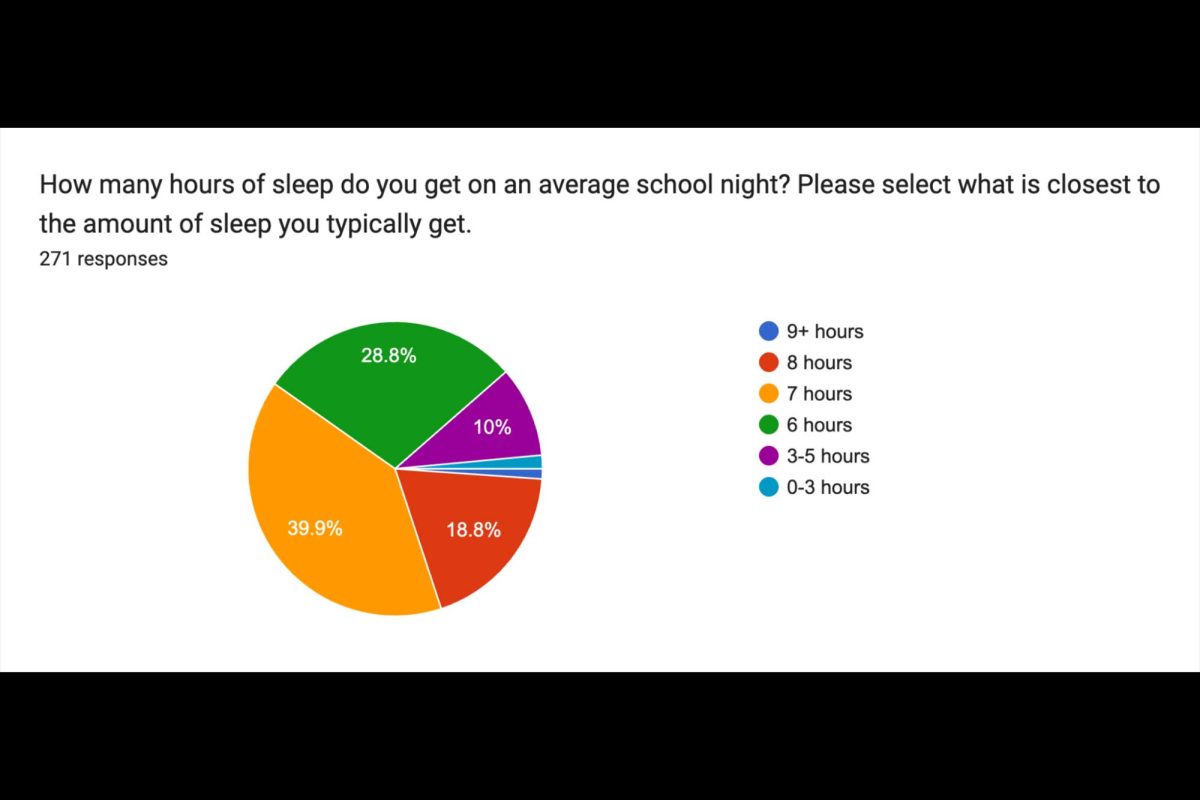
At 7:30 a.m. on a Wednesday morning, students pour into the school, set for a day of learning. Yet only 1.1% of those students have gotten enough sleep.
According to an article by Johns Hopkins Medicine, teens should get at least nine hours of sleep per night. A Panther Press survey of 267 students found that 98.9% of students did not meet this benchmark, and 80.1% of students got less than eight hours of sleep.
For students to get a full nine hours of sleep on Haven’s current schedule, which starts school at 7:35, they would need to go to sleep at 9 p.m..
“No one is going to do that,” junior Sarah Zhang said. “At my house, we eat dinner at 8:30. It’s just not enough time. Every day I have to eat, shower, do work, feed my cat. I don’t think it’s possible.”
Some attribute students’ problems to lack of sleep.
“I feel like that’s always the number one answer, if people don’t seem like themselves, is that they’re just really tired,” senior and co-president of Mental Health Club Anna Warley said. “And I think it’s hard, especially as a high school student, to get a good sleep, balancing being so busy with homework, extracurriculars and just trying to get a break too.”
Some students like junior Roxy Shelton solve the problem by napping at home.
“You’re drained, you refuel, you drain again, just to force yourself to be refueled,” Shelton said. “But the thing is, it’s so hard to do that and get nine hours of sleep.”
During fall finals, Zhang went three days without any sleep trying to balance studying with recreational time.
“For me, I have to entertain myself for a certain amount of time, then I will be happy,” Zhang said. “Otherwise, I’d be really depressed if all I do is study — I need to have fun somehow, and I just need that time.”
Sleep deprivation can have academic impacts as well; 41.3% of students surveyed said they had fallen asleep in class at least once in the last week. Junior Xander Cifelli tries to battle sleeping in class to the best of his ability.
“I don’t do it often, but lately I’ve been pretty tired. I don’t like to fall asleep because you usually miss a lot in class. But sometimes I can’t stay awake,” Cifelli said.
AN ALTERNATIVE SOLUTION
93.3% of students surveyed said they would want the school start times to be changed to a later time. Some students feel that the current schedule is not in alignment with their sleep schedule.
“It’s completely out of whack. I think if it was up to me, I’d be sleeping probably around [12 a.m.] and then waking up at like, 9 or 10 [a.m.],” junior Advaya Singh said.
In the Central League, Lower Merion and Radnor have changed their start times to 8:30 a.m., with Lower Merion making the change in 2024 and Radnor in 2019. The American Academy of Sleep Medicine recommends that schools start no earlier than 8:30 a.m.
“The school start time makes me wake up a lot earlier than I really want to, and my body needs to,” junior Tilly Gebhardt said. “I think that if it was moved back, even just a little bit, maybe to 8:00 or 8:30 [A.M.], that would make a huge improvement in my sleep schedule.”
According to superintendent Dr. Russell Johnston, changing the start times is something he is considering, though he has not had any formal discussions with the board yet.
“This is a topic that I think we have to continue to explore because of the science,” Johnston said.
Three ideas about adjusting school start times proposed in 2022 involved additional bussing costs, ranging from $125,000 to $250,000. However, Johnston identified other significant challenges.
“It’s not necessarily more expensive to shift start times… I think the challenge is more on how do we make sure that everything fits, particularly [getting] students to extracurricular activities, how this connects with the start time for the sports teams, clubs, and activities that happen after school, allowing students to get to work,” Johnson said.
Back when the discussion around school start times was originally tabled in 2022, the district identified multiple plans for how to change the start times. One plan that was rejected as part of the discussion around the topic was a plan to switch around the elementary and high school start times to better align with students’ circadian rhythms.
A different plan that was tabled and set aside for further investigation was to simply push back both the start and end time by one hour. Some have raised concerns about this plan’s impacts on athletics.
SCHEDULING CHALLENGES
According to Athletic Director Ms. Lynelle Mosley, most schools start their games too early for the shift, meaning some athletes would have to miss fourth block class time.
“Everyone else is not going to move the game times just because Strath Haven decides to start school a little bit later,” Mosley said.
However, a later start time may also benefit athletes. According to Mosley, more sleep could lead to better performance.
“If you’ve seen some of our games, they can be pretty intense. Having that appropriate recovery time is always important,” she said.
Although changing the start time might help athletes get more sleep, Mosley highlights the importance of healthy routines and not staying up late, no matter what the start time is.
“Are they still going to continue the same habits, where they’re not doing their schoolwork and they’re still waiting until after the game? Then you’re still in the same boat,” Mosley said.
Singh, who is on the soccer team and said he only gets six hours of sleep a night, is in favor of moving the start times later. He believes that a later start time would help academic and athletic performance despite missed class time.
“If it translates to more sleep, I feel like that trumps any [loss of instructional time],” Singh said.
Another idea presented in 2022 would delay the start time but end school at the current time by making fifth block mandatory and counting it for the state’s instructional hours requirement.
While the plan would allow students to sleep more, it would also decrease the amount of available class time. Junior Amar Wade, however, believes that better sleep could lead to better academic performance and compensate for the condensed classes.
“We would have a lot of cramming, possibly, but I think with more sleep we could do it,” Wade said.
Indeed, a majority of students surveyed said that a lack of sleep affects their academic performance from a moderate amount to a lot. Gebhardt maintained the importance of sleep for academics.
“I do better on tests. I feel better. I feel happier and my life is just better when I’m getting enough sleep,” Gebhardt said.
While start times may be logistically challenging compared to other solutions, Zhang believes changing them would be worth it.
“I just feel like 6 a.m. is so early,” Zhang said. “A lot of times, the sun’s not even up. Why are we?”
This story was produced during the spring 2026 Media for Publications class.