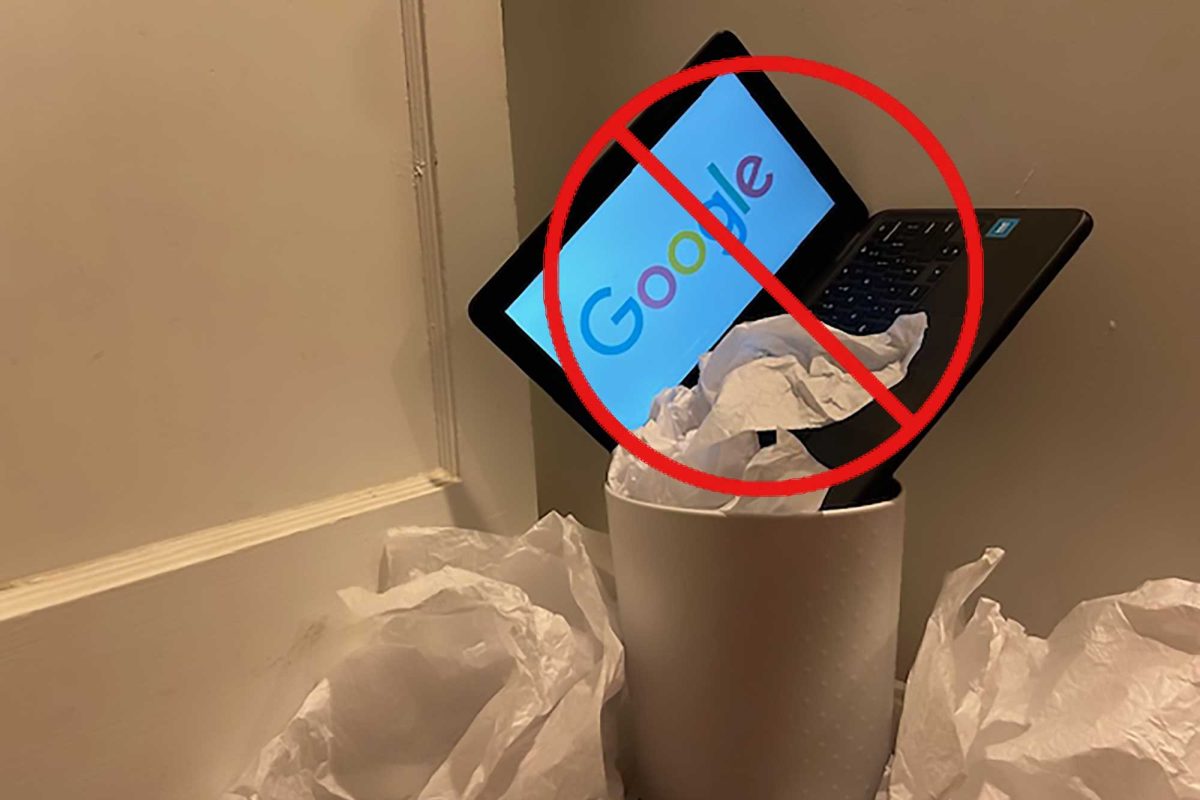
A student opens up their math homework, sees a problem they are unfamiliar with, and screenshots it, about to feed it into ChatGPT.
That student is more likely to feel negative about their AI usage now than they were a year ago, according to a recent Gallup poll.
The poll found that while there were just as many Gen Zers using generative AI (AI that generates new content in response to prompting) as before, there is now more negative sentiment surrounding AI.
This is in part due to the environmental effects of AI development and use. Building AI tools requires large amounts of energy, which can lead to more carbon dioxide emissions.
Additionally, the water usage needed to cool the hardware that powers AI is substantial. The Environmental and Energy Study Institute found that large data centers can take up to five million gallons of water per day, and research has found that one ChatGPT prompt takes five times the amount of energy as a Google search.
Despite the amount of research on environmental impact on data centers as more than 3,000 went online in the U.S., some students are still not informed about the environmental costs of generative AI use.
“I was talking to a friend, asking for a rhyme for a word, and they said they would ChatGPT it. I was like, ‘Don’t do that, you’re going to drain an ocean!’ The person was like, ‘it doesn’t use water!’” junior Shelby Seidman said.
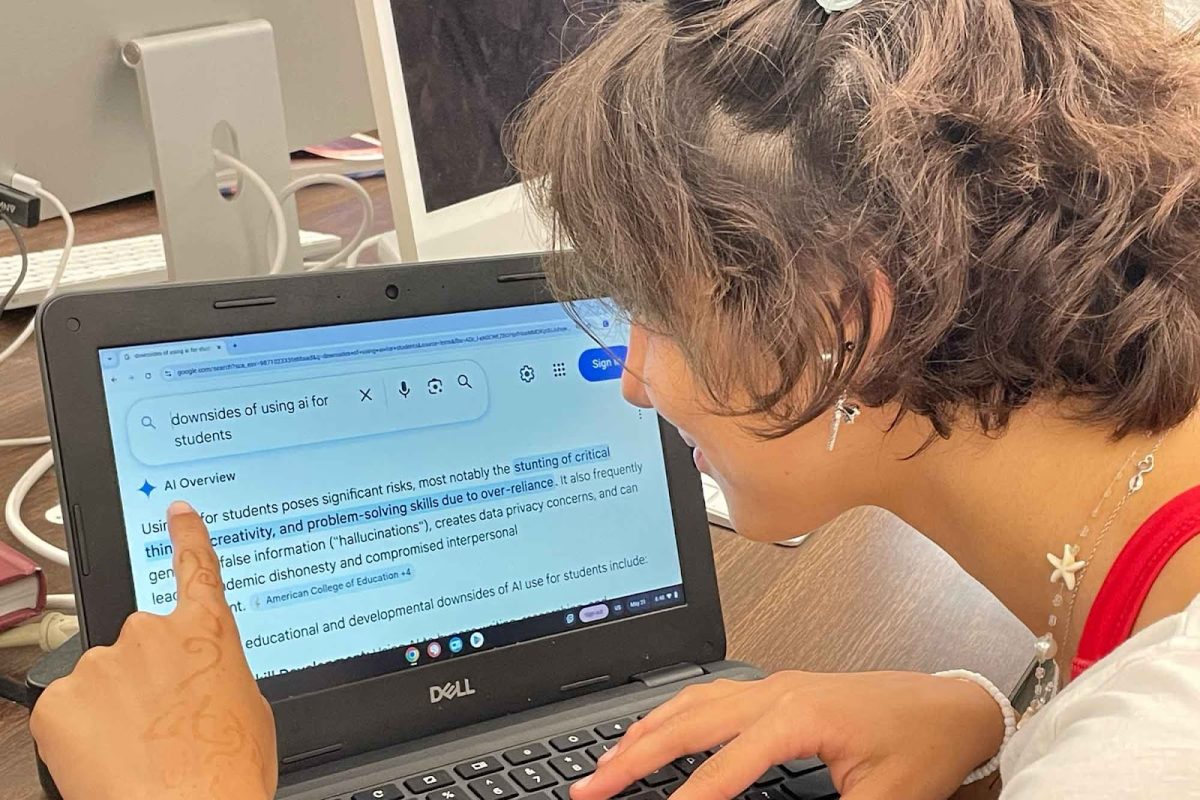
Another concern expressed by students and in the Gallup poll is that AI use may undermine education. More students now believe that AI will be harmful to their abilities to come up with new ideas on their own and think carefully about information.
“If younger kids are coming in and they’re using AI to do writing and things like that for them, they’re not going to have the skills they need later in life,” junior Pearl Ricci-Upin said.
Several studies indicate that using generative AI decreases cognitive load, or the amount of work a student needs to do, and negatively impacts critical thinking skills.
Though there is a new AI policy that may mean AI being introduced by teachers in a classroom setting during next school year, some students see AI use in the classroom as bad for learning.
“I understand that it’s a new tool and that people are trying to find ways to adapt to it,” junior Calpurnia Fries said. “But as someone who’s active in the classroom and sees the amount that it’s used, it’s hard for me to imagine in a learning environment that encourages AI usage [that] a lot of learning would be done.”
Students are also concerned by the idea of AI use in art or creative writing.
“I do a lot of creative writing… It’s very important to me, and I think it’s so stupid using AI to do that for you,” Seidman said. “If you’re not actually writing it, what are you getting out of this? If you don’t want to write something, then don’t write something. If you have an idea, don’t feed it into the machine that’s going to butcher it. That idea is you. It’s only real if it stays coming from you.”
Along with the issue of creativity in generative AI, some students have concerns about intellectual property. Because generative AI runs off of a base of real artists’ work, it is a concern that art may be fed into AI without the artists’ consent.
“It’s stealing from actual artists, because AI doesn’t create anything on its own,” Ricci-Upin said. “It just takes from something that already exists. I think this is going to put humans, who are making actual handmade work, out of jobs, because people are really starting to gravitate towards AI for the simplicity and convenience of it, rather than hiring an actual human artist to do things for them.”
One concern that students have with generative AI art is that it lets artists skip foundational work. Instead of learning how to work with media or practicing essential skills, a user can just enter a prompt to create visual art, music, or creative writing.
“I think the [idea of saying], ‘I don’t want to put in this effort to make something,’ and you just type it in and get instant gratification could stop other people from becoming really great artists,” Fries said. “That gratification that’s available stops them from taking the effort to make some bad art, and I think making bad art is important. I think AI art is going to lose us a lot of artists.”
As AI becomes more common among students, for some, it is important to stay true to themselves.
“There needs to be authenticity, especially in school work,” Ricci said. “I’ve heard too many people say, ‘I just use AI,’ and I think that’s a cheat code. When I hear that, I think it means you don’t want to put in the effort, and that’s going to bite you in the butt in the future.”