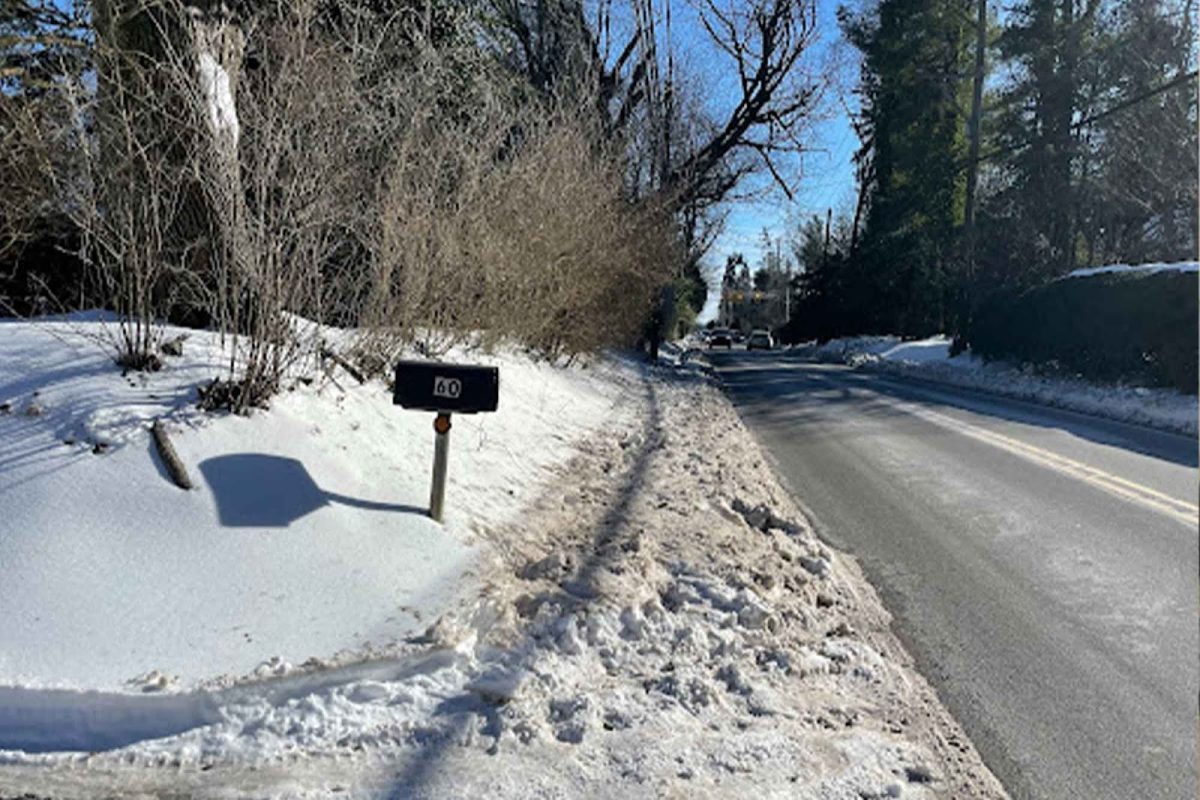
Snow days may be no more.
At the April 27 school board meeting, the board approved the district’s application for flexible instructional days (FID), a form of programming permitted by the state for circumstances like snow days, for the 2026-2027 school year.
At the same meeting, the board revised the calendar to extend the school year after three snow days this year exceeded the two days built into the calendar for inclement weather. For next year’s calendar, only one day is built in for inclement weather, meaning that after only one snow day the district would have to add days to the end of the school year or utilize flexible instructional days.
Superintendent Dr. Russell Johnston framed the idea as a way to avoid negative effects of adding days to the end of the school year, citing a middle school French exchange program that will now force students to miss school.
“Extending the school year becomes problematic on many, many levels,” Johnston said.
In the meeting, Johnston specified that the district will not be using Zoom or video call for remote learning. Instead, the district identified asynchronous learning as the way it would provide instruction for students at home.
The days will operate similarly to asynchronous Wednesdays during the pandemic, with students completing work assigned on Schoology on their own time. According to the district’s application to the state, students will be required to complete an online attendance check-in prior to 8 a.m. on the flexible instructional day and complete the assigned work in order to be marked present.
“Although the District’s primary instructional model is asynchronous, the combination of required realtime check-in, time-bound assignment submissions, and ongoing teacher monitoring ensures that there is verifiable evidence of student participation on the FID,” the application states. “This multi-measure approach allows the District to accurately account for attendance while maintaining flexibility for students and families.”
In addition to giving assignments in Schoology, the application requires that teachers host optional virtual office hours providing “live support, clarification, or additional instruction” during the block that students would have that class if normal school was in session.
Some students expressed support for the idea, seeing it as more convenient than regular coursework.
“It’s a lot more accessible for a lot of kids,” junior John Reilly said. “I think it’s easier for them to just get out of bed and just do whatever assignments on Schoology and then kind of be done for the day instead of having to put in the effort to actually go into school and be there.”
Other students, however, were dismayed by the prospect of losing the typical snow day experience.
“It kind of takes away from the enjoyment of snow days, because a lot of times snow days can just be like little mental health cheats, where you don’t have to worry about stuff, or little breaks from school, because school can be stressful, and making everything online learning can still make it difficult,” junior Nico Hopkins said.
Hopkins also criticized online learning as a mode of instruction.
“Online learning is already difficult to navigate and then integrating it every now and then during the snow days when people are tired and looking for space to rest, I think, makes student performance worse and makes it harder to learn,” Hopkins said.
Johnston, though, emphasized the importance of flexibility and allowing the district to accommodate additional snow days without adding more days to the end of the year.
“Having it as an option is just a really good idea,” Johnston said.