“United we stand, divided we fall.”
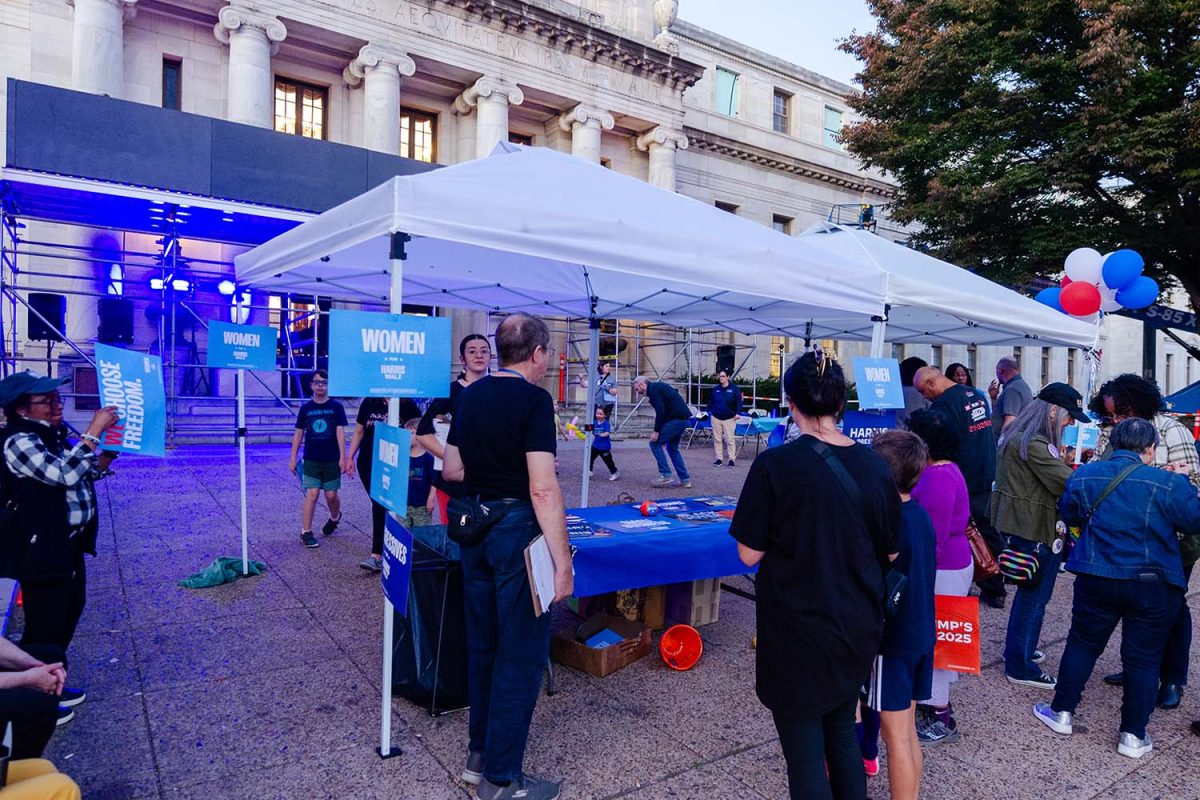
Hundreds of voices echoed this phrase outside Delaware County Courthouse in downtown Media on Jan. 11, calling for accountability from U.S. Immigration and Customs Enforcement (ICE).
The rally was sparked by the death of Renee Nicole Good, an American poet, writer, and mother who was fatally shot by an ICE agent earlier that month. Community members came together to hold a vigil for Renee Good and speak out against the actions of ICE.
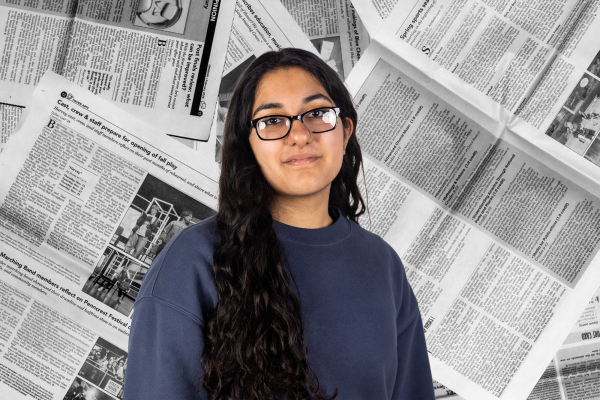
The event was organized by Delco Indivisible, a nonpartisan group dedicated to advocacy on social issues. Freshman Quinn Kapoor was among the many who attended.
“What motivated me was just, I’m tired of seeing people post about these things online and never show up to [protest],” Kapoor said.
In the age of digital activism, Kapoor emphasized the importance of in-person participation.
“I always make it a point to try to show up to events, because I don’t want to be one of those people who’re posting about it and not doing anything,” Kapoor said.
A key difference between offline and online protesting is that in-person protests create a stronger sense of community, offering support that isn’t always present online.
“It felt very nice. It’s always good to have a community showing up,” Kapoor said. “I think it was also nice seeing a large demographic of older people and younger people that were there.”
Despite the common stereotype that the younger generations are the more “activist” generation, older people came together as well to address the issue.
The protest served not only as a demonstration but also a vigil to honor Good’s life. However, chanting wasn’t the only form that citizens used to protest.
“There was a girl in high school. She sang ‘Bridge Over Troubled Water’ and ‘This Land is Your Land’,” protester and freshman Evangeline Feltman said.
“Bridge Over Troubled Water” symbolizes unconditional support through life’s hardships, and “This Land Is Your Land” serves as the belief that the nation’s resources belong to all people, critiquing the American system.
“I think protesting can work mostly through the community. It brings a lot of people together,” Kapoor said. “I don’t know if I would say it creates a huge effect on government things. But I will say, when you have a community of people all together, fighting for one thing, it does push politicians to make a change.”
Collective action leverages “strength in numbers” to amplify individual voices in protest. Historically, when people have used collective action, whether it be for the civil rights movement or the women’s suffrage movement, it pushes policymakers to enact a change, showcasing its impact.
Yet, protesting is becoming increasingly more difficult in today’s political climate.
“In this day and age, [and] ICE agents with these weapons, I think it’s gotten significantly less effective, because there are just ways to stop protesting and turn the narrative to protesters being violent,” Kapoor said. “It’s not true, but it is very easy to convince people that they are.”
Protesting can be difficult, and as incidents occur throughout the nation, the distinction between actions becomes difficult. The narrative, as Kapoor states, can be manipulated.
In an interview with The Panther Press in April 2025, Coordinator of Safety and Security Ms. Dana McBride and then interim superintendent Dr. Jim Scanlon outlined the district’s protocol if immigration officers were to come to the school. Officials stated that the credentials, paperwork, and the officers themselves would be verified before being granted entry into the school.
According to Scanlon, the school district social workers work regularly with families who might be impacted by immigration enforcement.
Delaware County’s website states that the county follows state and federal law regarding immigration law and policy. Some local communities, such as Upper Darby and Haverford Township, have passed local resolutions to limit cooperation with federal Immigration and Customs Enforcement.
Kapoor emphasizes the importance of showing up and fighting for change.
“When you have a community of people all together, fighting for one thing, it does push politicians to make a change,” Kapoor said.