
Shock registered on freshman Lindsay Gupta’s face. “I don’t like this at all,” she said. She was referring to the new “bell-to-bell” phone ban bill the Senate passed on February 3.
The bill will ultimately go to Governor Josh Shapiro to sign. Shapiro has already expressed his support for the new ban, according to the website of the Commonwealth of Pennsylvania.
“I’m calling on the State Legislature to send a bill to my desk requiring our schools to implement policies that take cell phones and mobile devices out of kids’ hands from the time they start class until the time they leave for home — helping teachers and kids focus on learning,” Shapiro stated in a post on X.
Senate Bill 1014 proposes phones to be banned for the entire school day. This means instructional and non-instructional time, including lunch and time moving between classes.
Loading Viewer...
These new rules would be implemented at the latest by the 2027-2028 school year, affecting freshmen and sophomores the most.
The bill includes exceptions for students who require their phones for medical purposes, have an IEP or 504 plan in which their phone is part of their accommodations, or English language learners who use their phones for translation purposes.
Teachers can also allow students to use their phones during instructional time with principal approval, however the time must be limited and cannot be regular.
The specific procedure that WSSD creates would be required to align with all details outlined in the bill.
A revised policy must be available on the district website, and all members of the school community (students, faculty, parents) are allowed to have input on the policy WSSD adopts.
Students question how the policy will be enforced, especially considering the way some students use our current phone policy.
“If kids really want to have their phones, they’re probably going to keep it on them and use it. The people that are going to obey the ban are probably not using their phone anyway,” senior Colin Foster said.
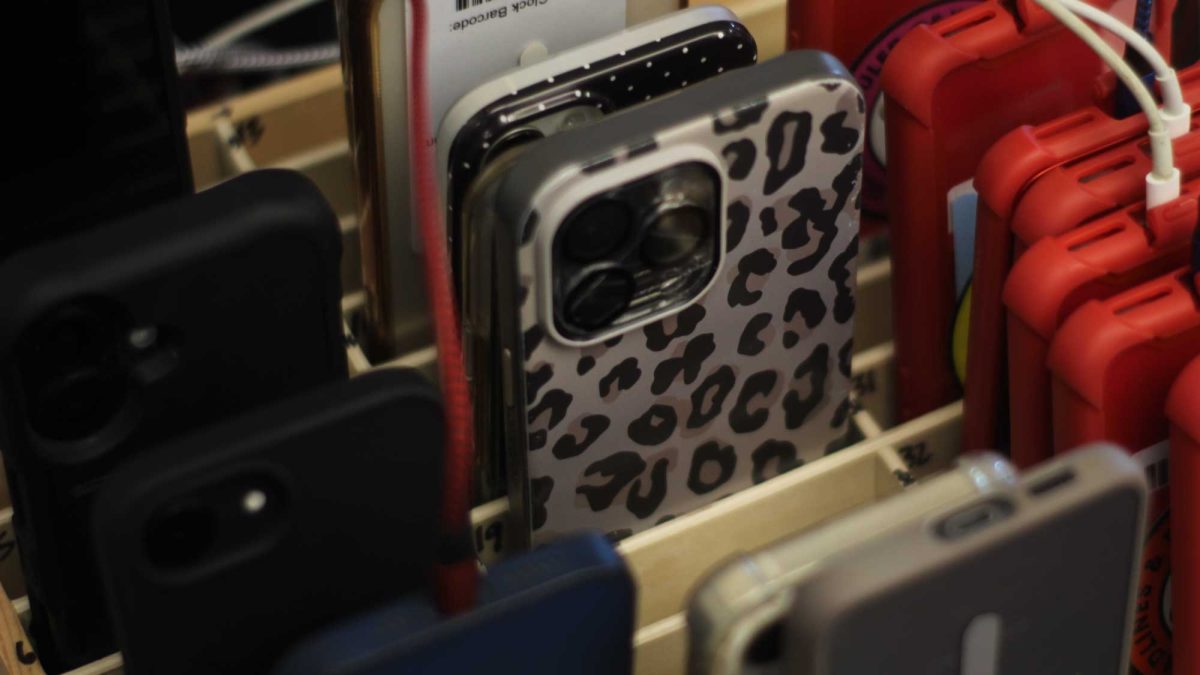
However, some students think new rules are unnecessary. Most students seem to be following WSSD’s current Policy 237, which requires students to put their phones away in a box or open pouches during class, but allows them to use devices during lunch, before and after school, and between classes. Policy 237 was adopted for the 2025-2026 school year.
“I feel like the pouches currently are working fine. I feel like everyone’s really abiding to those rules,” freshman Mackenzie Gupta said.
Freshman Charlotte Rosser is concerned about her school experience and quickly contacting parents.
“It’s not just the learning aspect, it’s enjoying school. Half of enjoying school is [when] I’m on my phone talking to my friends. Just because I’m on my phone, that doesn’t mean there should be anything bad with it. And what if I need to text my dad?” Rosser said.
Many students share Rosser’s opinions. “I get it for in class, but the full day, no breaks? I think that’s dumb,” freshman Matthew Abate said.
Many students use their phones in the cafeteria, either for entertainment or connecting with parents and friends.
“At least have it for lunch,” freshman Matthew Tamayo said. “I feel like [all day is] a little bit excessive.”
Freshman Luke Sampson agrees with Tamayo. “I disagree with [the bill], because I feel like kids can get bored pretty easily and I feel like we need our phones to communicate with our parents, our teachers… they’re kind of necessary,” Sampson said.
Some students think the bill is a good idea to help with battling distractions during the day.
“I think it’s really good because it encourages students to keep focused at school and not get distracted with other stuff, even if it’s just five minute breaks, I think that can take them off course and it’s good to stay focused during the day,” freshman Ari Danovitch said.
Still, the majority of Haven students are not pleased with the proposed ban.
“I think students aren’t going to like it,” freshman Lia Kraemer said. “I feel like high schoolers are responsible enough to decide when it’s a good time to use it or not. I feel like I’ve seen everybody be responsible with it.”
The bill, which had bipartisan sponsorship and passed 46-1 in the Senate, will continue to the House of Representatives and then the Governor. Senators suggest the Senate and the House both being in Harrisburg in late March would be a good time to finalize the bill.