“It could always be worse.”
It’s a common perspective to find gratitude, humility, and to minimize negativity during a bad situation to show that the outcome or issue could have been much worse.
Except the truth is, it really could all be worse. Many of us are more fortunate and blessed than others. Realize it. That realization may come with time, experiences, or the people that you surround yourself with; either way, staying humble matters.
Outside of our personal bubble, countless others struggle in ways we couldn’t even imagine, like people not knowing where their next meal is coming from, or those without access to clean drinking water. Acknowledging this doesn’t make your struggles meaningless; it just puts them into perspective.
According to World Bank, around 8.5% of the world’s population lives below the extreme poverty line. This statistic does not invalidate the stress of grades in your classes, anxiety of college applications, or drama at the lunch table. You shouldn’t feel guilty for having problems, but it’s worth asking: how big are these problems? Like actually?
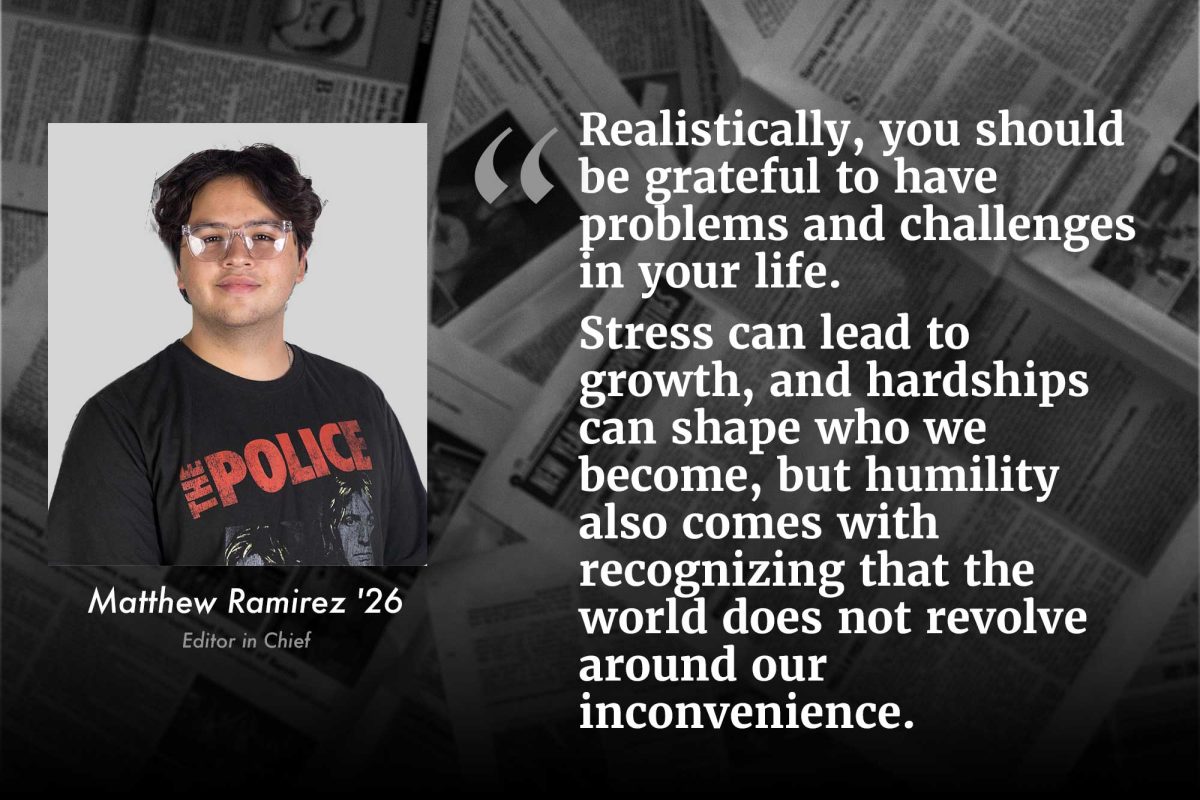
Realistically, you should be grateful to have problems and challenges in your life. Stress can lead to growth, and hardships can shape who we become, but humility also comes with recognizing that the world does not revolve around our inconvenience.
This is where arrogance creeps in.
Many people don’t have the chance to help themselves and control how they appear simply because of how they grew up, were raised, or because of the special circumstances they were born into. Recognizing that is not self-criticism, but more self-awareness.
Sometimes I think about the conversations that happen so casually in my everyday life. Complaining about the long flight to California for a Disneyland trip, or whining about the cold weather during a weeklong ski vacation in upstate New York. When we forget that a lot of the topics of our conversation are actually luxuries and privileges, we risk coming across as entitled or out-of-touch.
Not everyone is ‘privileged’ to have these types of indulgences. Some people in our community do have to worry about meals or stability, which is exactly why humility matters. According to our school profile, nearly 19% of our students receive free or reduced lunch. There is a stark difference between moments of entitlement and experiences or situations of real hardship.
Humility starts with appreciation.
In spite of things going wrong, there is value in pausing to recognize and appreciate all the things that you have, and all that you have accomplished. Keeping a positive attitude may not be the immediate solution, but it does change how you deal with a problem. Your world can become less heavy when you prioritize positivity.
The people that you surround yourself with also matter. Humility grows when you digest the perspectives of others, acknowledge your flaws, and show gratitude. Focusing on serving others without expecting anything in return has a way of grounding you in the best way possible.
This column stems from a personal philosophy, not from a place of judgment. I don’t intend to sound arrogant or to be preaching as ‘Mr. Humble’ himself, but I also understand that humility can rub people the wrong way. My message is straightforward.
Remember where you are. Remember that you’re breathing and alive.
Stay humble.
Each opinion represented in The Panther Press is the view and voice of the writer. Opinions, as the selection and curation of content by the editors, do not represent the views of the entire Panther Press staff, the adviser, the school, or the administration.