With the rise of the internet and social media, information is supposedly easier to find than ever. Since social media has evolved so far, and we have worldwide information at our fingertips, in 2026, media literacy should be at an all-time high. But are we actually well-informed about the content that we consume online?
Most people who absorb information online, particularly on social media, do not go out of their way to look deeper on the topics they are hearing or reading about.
I have to admit that on many occasions I have done the same. There have been many times when I have not cared enough to check the legitimacy of content I have seen online, and unknowingly, I have been misinformed. Sometimes it’s by fake statistics used to push an agenda, someone lying in a TikTok comment section for seemingly no reason, a situation maliciously placed out of context, or even a cute cat video that I didn’t notice was AI.
Specifically, the recent rise of short-form content has contributed to this misguided consumption. When actual news or information with notable depth is presented through short form content, like the feeds of TikTok or Instagram, the line between a reliable video and a misinformed one becomes blurred. When someone is scrolling through their feed and sees news, a video, or hears about a scientific study, they are not going to go out of their way to fact-check it.
It might sound like I am blowing things out of proportion while talking about this subject, but I believe the spread of misinformation through short-form content is a deeply serious issue.
Believing one minor lie on the internet may seem trivially small in comparison to the sheer volume of other content consumed. However, when people start believing political, scientific, health-related, and other more serious types of misinformation, then the ugly byproducts of short-form content may end up materializing in the real world.
Misinformation can lead to actual social and political problems, such as the denial of established medical truths, the spread of conspiracy theories, political echochambers, etc.
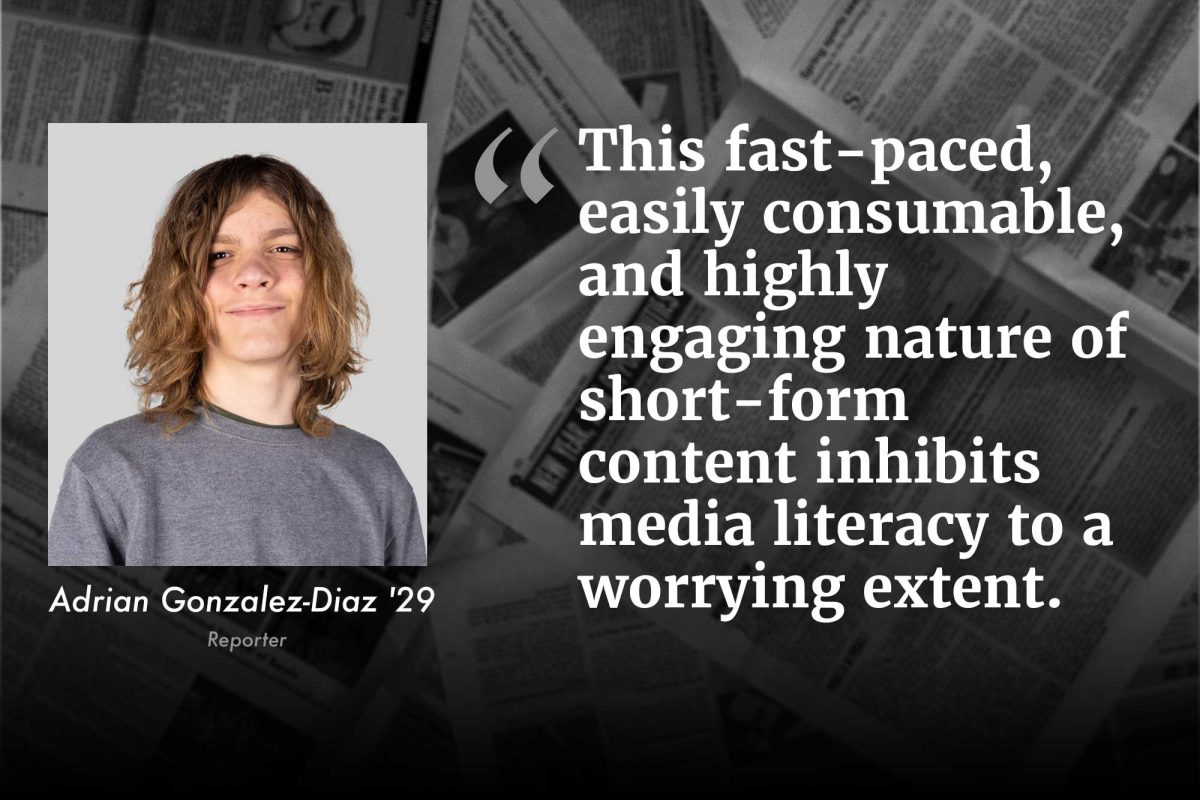
Even if someone claims they aren’t tricked by misinformation online, it is likely that they actually have been, and did not notice simply because it is hiding within the rest of the TikToks or reels they’ve consumed. This fast-paced, easily consumable, and highly engaging nature of short-form content inhibits media literacy to a worrying extent.
You are not naive or dumb if you scroll on TikTok or Instagram without thought and fall for misinformation, because the truth is that it is not entirely your fault. These platforms that so many people spend their time on are, by either design or chance, built to promote intellectual laziness.