
“Oh no! It’s the bad guy with a mask! I’m scared! Wow, the bad guy is my mom who has been missing for two episodes!”
I consider this to be objectively terrible script writing; it violates that age-old adage to “show, don’t tell.”
Yet, “telling” over “showing” is what Netflix has been telling its writers to produce — just to appeal to an audience that is increasingly unfocused on what they’re watching.
Some people are doing laundry, homework, or just scrolling on their phone while watching. This is second screen viewing.
“Because Netflix knows a certain target audience will be ‘second-screening’ these series, the streamer wants the show’s writing to facilitate this practice,” an article published by The Conversation states. “Concretely, this means overly expository dialogue, repeating plot points and adding lots of voice-overs to narrate the action and help the distracted viewer follow along.”
That’s why you might be noticing your favorite characters starting to state what they’re doing while they’re doing it, so you don’t even have to look to understand what is going on. The show is meant to work in tandem to your distraction of choice, instead of pulling your attention away fully.
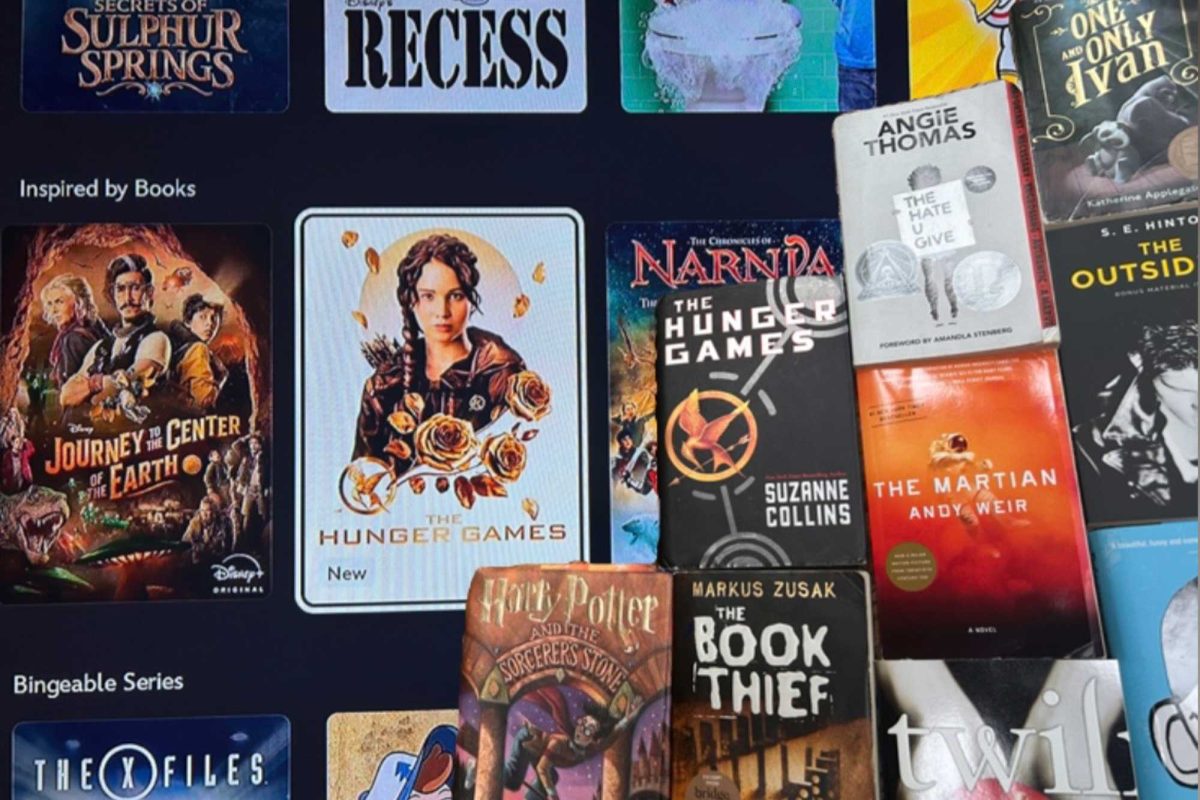
My favorite movies and TV shows are my favorites because they’re complex; that complexity is a result of writers who are given full creative freedom, not instructions to pander with redundant information.
The media we consume can bridge cultural divides. It’s how connections are made and how we discover more about each other. Good media challenges our current perceptions of the world. It makes us stop and think and never forget.
If media is being written under the assumption that we won’t bother doing any of those things, of course it won’t be good. It won’t challenge a thing, because that would violate the need to be simple; it would be a waste of time to watch.
While dumbing down scripts is a decision made by Netflix’s executives, it is a decision we’ve made as a society as well. Netflix wouldn’t have done this if the data didn’t reflect the truth: we really don’t give our undivided attention to anything.
Numerous studies have shown that multitasking doesn’t work. We keep doing it anyway, and we’re losing quality media as a result. In the future, what will stop everything being written by AI? What will stop movies from becoming diluted imitations of true humanity?
We need to stop second screen viewing, and recognize that this type of writing is churning out tasteless, forgettable media. That is the only way we can escape this slippery slope.
Even what we write for The Panther Press is done with your attention span in mind. Each paragraph is two or three sentences for a reason. Many newspapers write articles with an inverted pyramid model: most important information at the top, because most people don’t read past the headline.
And if you didn’t read through this whole article, here’s your TL;DR: respect the work that was put into the media you consume, and pursue complexity.
Each opinion represented in The Panther Press is the view and voice of the writer. Opinions, as the selection and curation of content by the editors, do not represent the views of the entire Panther Press staff, the adviser, the school, or the administration.