
Haven offers the courses Clothing Structure and Design and Advanced Clothing and Design. These courses have long-standing implications for students involved in the design, construction, and sewing process of creating handmade art and usable items.
Junior Shelby Seidman is an experienced clothing designer.
“I got into hand sewing around the summer between seventh and eighth grade,” Seidman said. “I started getting into the alternative fashion scene, like punk culture, and that has a lot of patch making and patch jackets.”
Even to this day, Seidman recounts that they are still very proud of the first patch jacket they made.
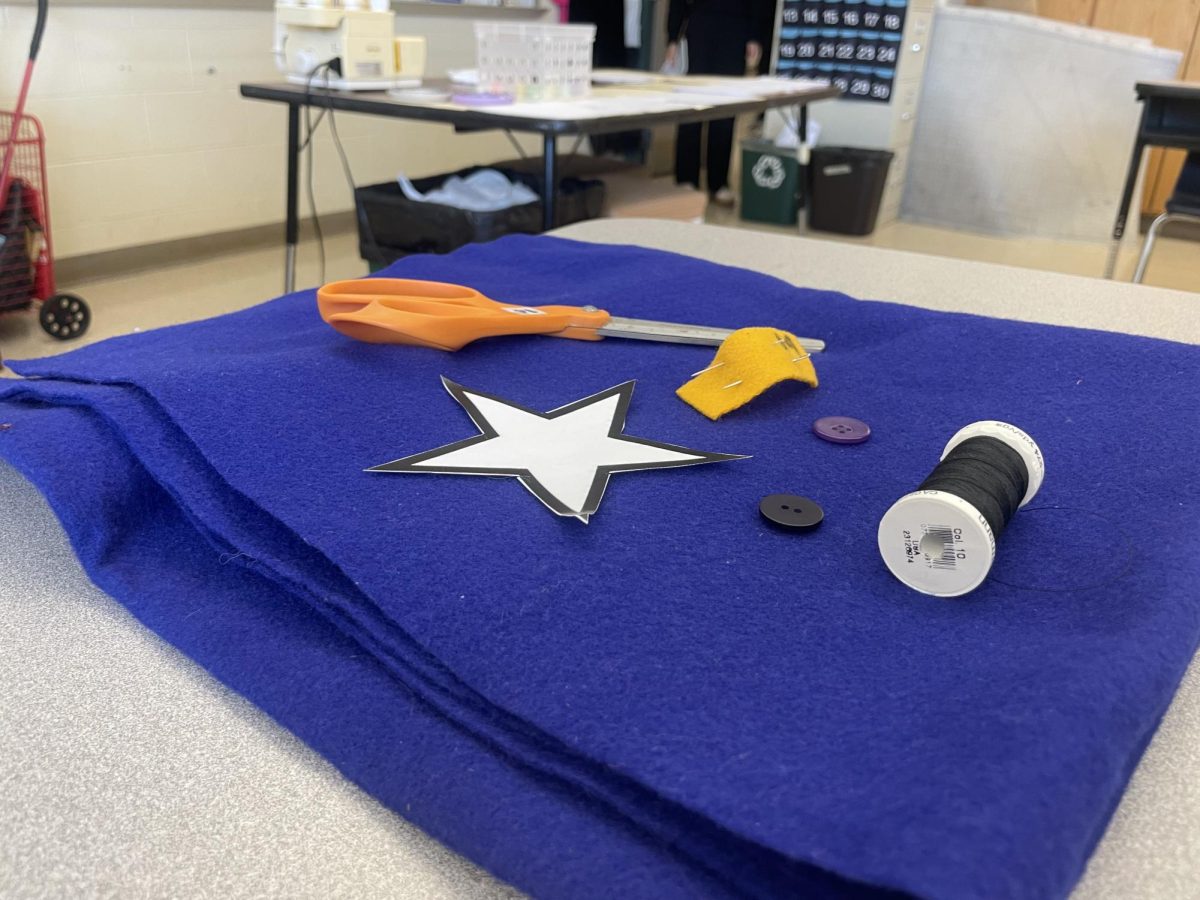
Seidman detailed the process of creating a small star plushie, with button eyes as an introductory lesson into hand sewing for the Haven community.
They explained that the first step of the process is to pick your fabric, string, needle, scissors, and any other materials you will need. In this case, Seidman picked up some stuffing, buttons, and a star-shaped cutout as well.
The next important step is to fold over your fabric so that you can have two of the same design when you cut it out, and to then lay your tracer on top of it and pin it. As you cut the shape out, make sure to keep the pins in place so the two sides come out looking identical.
Seidman details that sewing on the buttons is the next best choice, and they explain that in order to get the best results for this, one should take the string around the button around four times in order to make the attachment really secure.
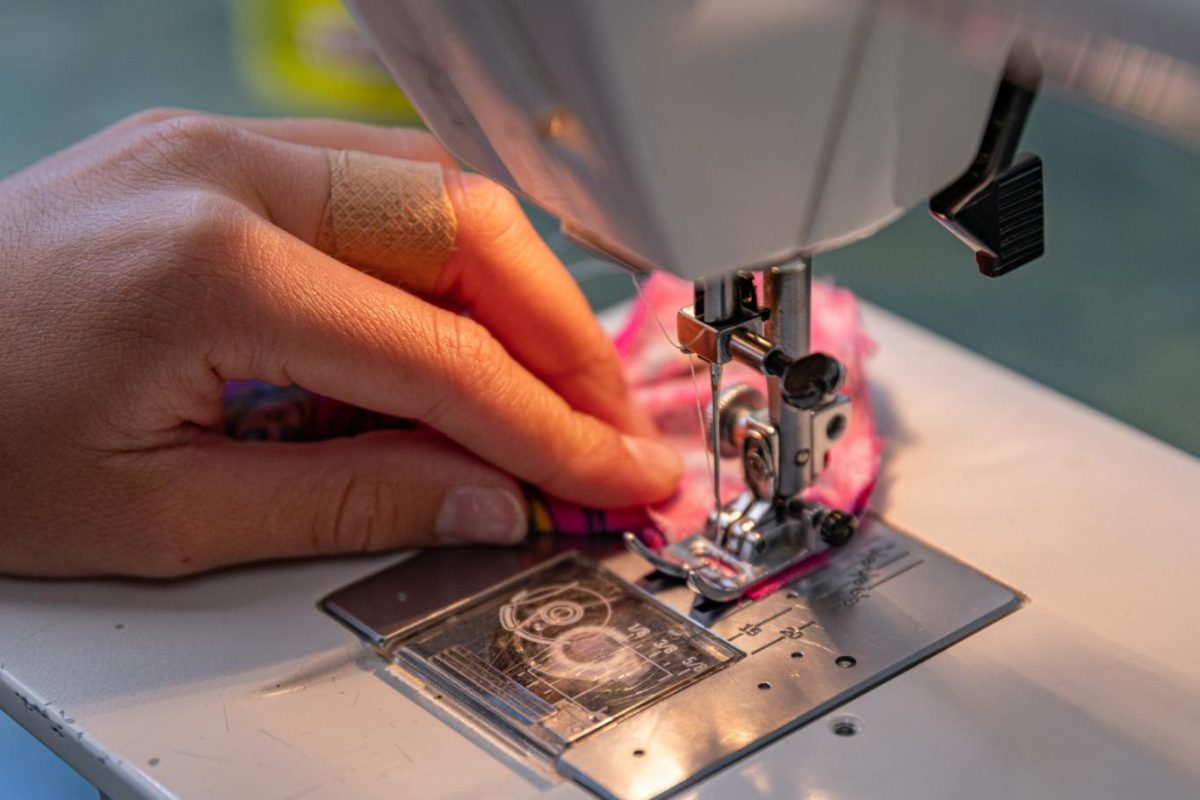
Next, Seidman used a ‘running stitch’ and a ‘back stitch’ combination when hand sewing to create a seamless edge for the stuffed animal, so that eventually when it had stuffing, none of it would spill out. One can accomplish the running stitch by simply taking the needle and its string continuously through the edge of the fabric, forward and back again. This way, when you’ve reached almost the whole way across the edge of the fabric — you need to leave space to fill in the stuffing — you can go back and essentially repeat the same process but in an opposite alignment to your past stitches.
Once you fill your stuffie with its stuffing, and close that last section of fabric off with those same stitches, you will have completed your first sewing project.
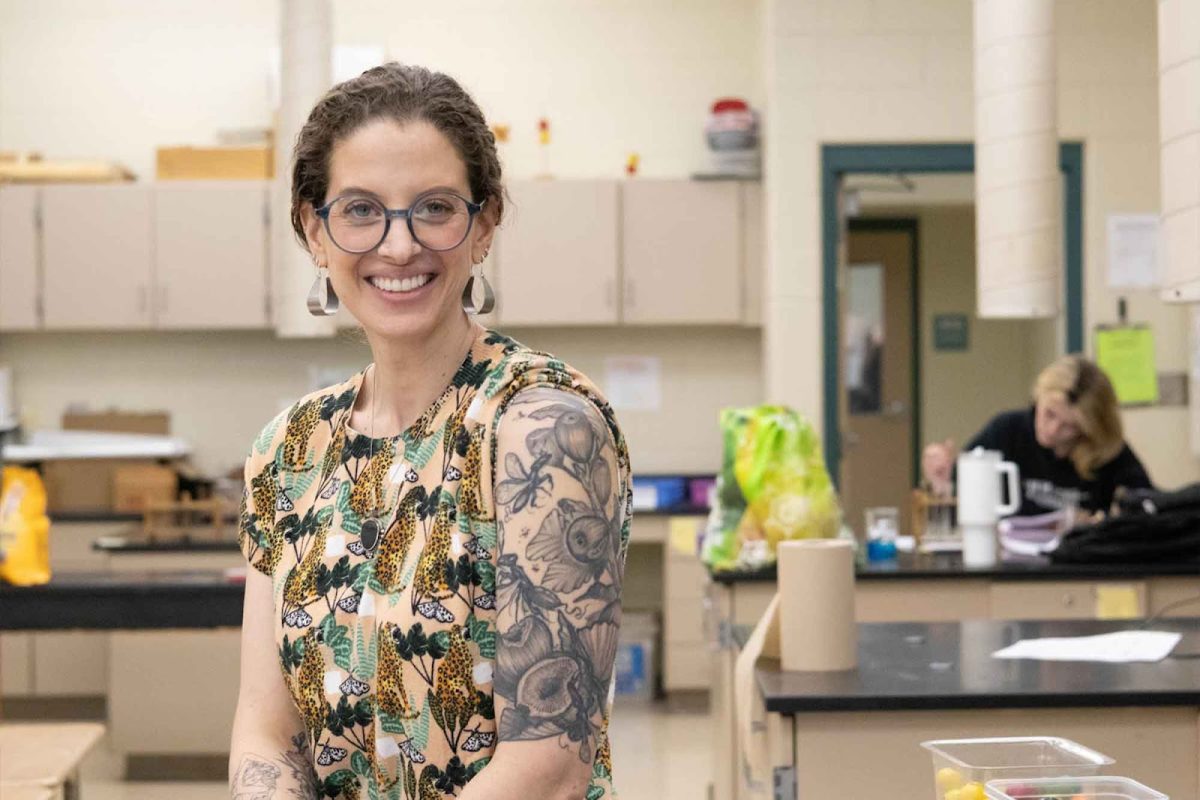
“Sewing opens up doors for students to be completely original; this way they’re not stuck buying pre-made things,” clothing construction and design teacher Ms. Frances Schoonover said.
Many students recall how the class affected their lives in a positive way.
“It was super chill and a nice way to start the morning. I just love being creative for an hour and a half,” junior Kaylin Fava said.
Clothing design and construction at Haven can have many positive implications for students searching for ways to express themselves and to work with their hands to create something personal.
“It’s chill, but not chill in the sense that you’re not doing much,” Seidman said. “Chill in the sense that you never feel like the world’s going to end if you get a bad grade in this class. It has a lot of room for experimentation in it, so you very much get to bring your own creative sensibilities, even [in] the clothing design class.”