
Voice of the student body

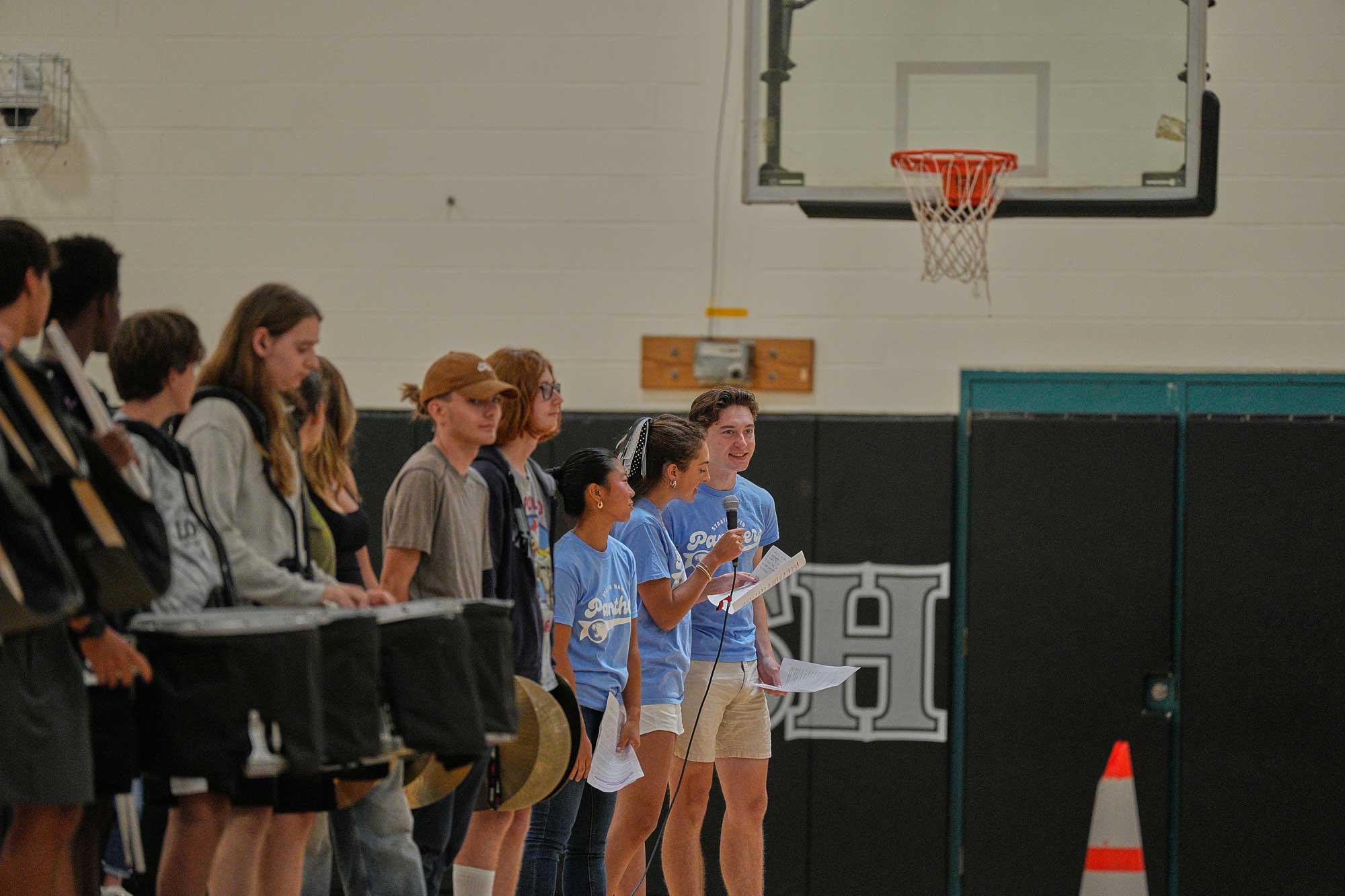
The election process is split into three equal parts, though the specifics are not explicitly communicated to student voters.
According to advisers Mrs. Maria Neeson and Herr Alex Paul, the first component is the popular vote from the students, which candidates gather during campaign week.
The second is the teacher recommendation, in which teachers rank candidates they have experience with across categories such as leadership and ability on a scale from 1-5 in a Google form.
The third is a 10-15-minute interview conducted by advisers with the help of senior council members, after which each candidate receives a numerical score based on a rubric.
“It’s important that we look at all three different areas where a teacher’s point of view gives the same weight as the student’s point of view,” Neeson said. “We don’t want it to be a ‘Well, you’re popular, so you’re in.’”
The final decision is a quantitative decision. A candidate’s rank in each part is averaged across all of the categories to determine who received the highest ranking.
Each candidate is considered for the role they are applying for. If they are at the top of the ranking for that role, they are elected.
The one-third system gives even weight to all sections of the process, but different portions can have a drastic impact on results.
“That first place in the student vote still is a heavy number that has a lot of weight,” Herr Paul said. “It definitely has made the difference in some years between vice president and president, as well as whether students are on council or not.”
The vibrant campaign week, where students are persuaded by creative slogans and treats, is largely the only window student voters have into who is running.
Neeson argues that it’s up to the student body to seek out additional information through candidate bios posted on Instagram or in the hallways, though guaranteeing student engagement with these materials is a challenge.
“Not everybody has [social media]. We try to post [candidates’ bios], but kids don’t always read them – kids just walk right by it,” Neeson said. “We do rely on the kids to kind of look into it themselves, as opposed to providing it to them at an assembly or something along those lines.”
Some student council members believe the system is necessary to ensure quality leaders.
“You know how the electoral college is there, so the people of the United States don’t elect some crazy person?” Stockman said. “I feel like the amount of transparency allows Ms. Neeson and Herr Paul to act like the Electoral College and make sure that [the decision] is reasonable.”
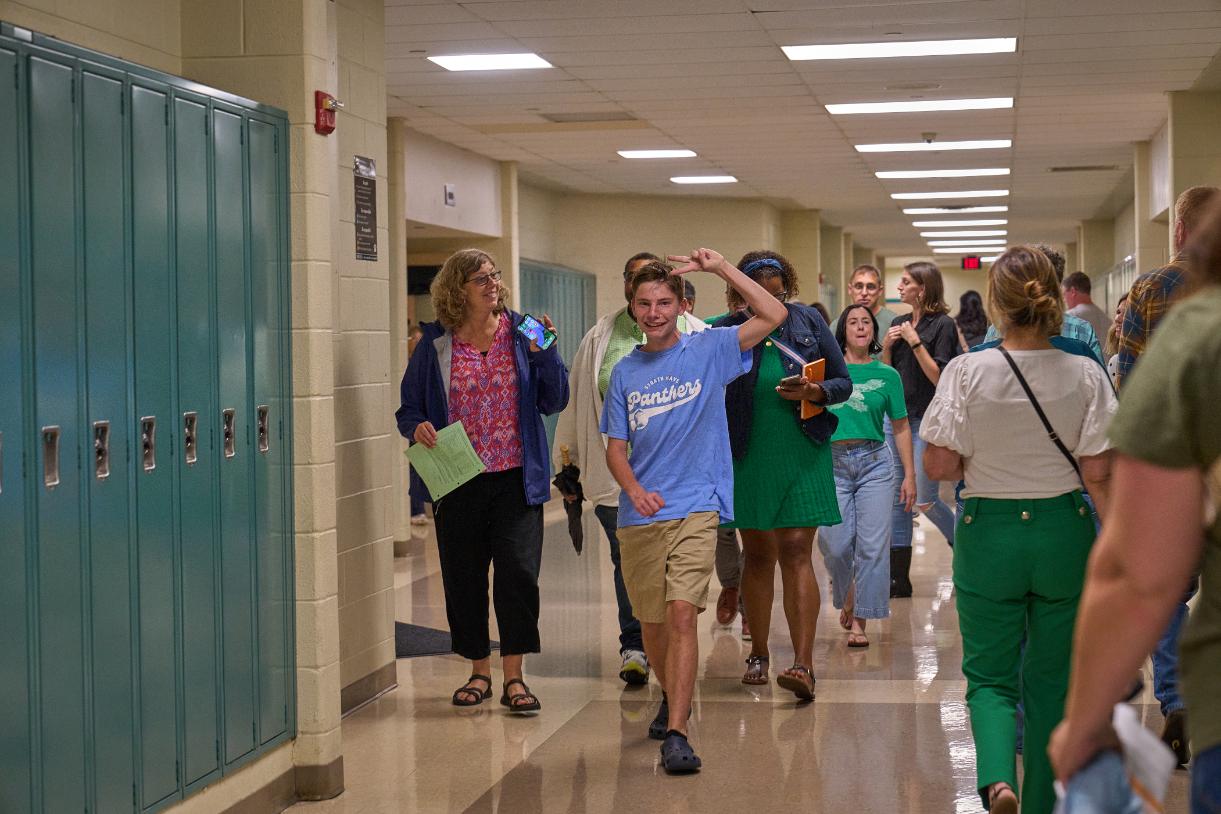
According to Assistant Principal Mr. Thomas McLaughlin, the administration has always sought feedback from the Student Council.
“I make it a point every year, whoever wins the election, I usually introduce myself to them,” McLaughlin said. “I tell them where my office is, and I say, ‘[Student Council] has an open door policy to come into my office at any time with anything they want.’”
McLaughlin’s open-door policy reflects the stated board policy that the building principal “develop a structure that enables representatives of the school’s student government to meet with them on an as-needed basis to discuss school issues and concerns.”
But for some issues, like the impending high school renovations or even the new student government policy, Student Council has not been approached for its input, according to Herr Paul.
Instead, district administration has sought feedback from a different group of students: the Student Advisory Council established by Superintendent Dr. Russell Johnston. Johnston created the council with the intention of having them advise him on issues like the cell phone policy and the renovations.
According to Policy 228, the superintendent does have the authority to establish other forums outside of Student Council “to meet on a regular basis to discuss issues and concerns.” In the case of the Student Advisory Council, the group is selected, not elected.
The policy requires that these forums “be structured, to the extent practicable and appropriate, to reflect diverse student voices and capture perspectives from a broad and representative cross-section of the student population.”
“I’d like to think that the more that we’re involving students, the better we are at making decisions [and] the better informed we are, both as an administration and as a board,” Johnston said.
But on some issues, students from Student Council have not been able to be involved. Student School Board Representative Joy Yang tried to assemble student input on the cell phone policy to no avail.
“This year, we did ask [the school board] ‘Do you want us to make a form asking students what their thoughts are about the phone policy and get feedback?’ I’ve asked them, and they’ve never got back to me on that,” Yang said.
According to Yang, the school board told her that the IT department would reach out to her about her request. But Yang said she never heard from the IT department.
Because of that experience, Yang has grown cautious of gathering additional student feedback for the board or raising complaints in the reports she offers at each school board meeting. According to Yang, the representatives were told at the start that their school board reports should primarily focus on events from around the district.
“If it’s happenings or achievements of certain groups, that could probably be easily done,” Yang said. “If it’s, for example, complaints about the phone policies, [it’s] a little more difficult, because you have to get approved through the board. And that doesn’t always work out.”
According to Johnston, the superintendent and school board provide no editorial feedback to the school board representatives’ remarks.
“They are permitted to present what they prepare,” Johnston said.
Student Council leaders maintained the importance of gathering student input on things like spirit days.
“I’ve heard that there isn’t a lot of interaction between students and the Student Council,” Martell said. “But at meetings, we definitely do take into account a lot of what people say. This year, we tried to get votes on spirit days, and people definitely come in and say, ‘I’ve been hearing people in the hallways say they don’t like this, and I think that we should change this.’”
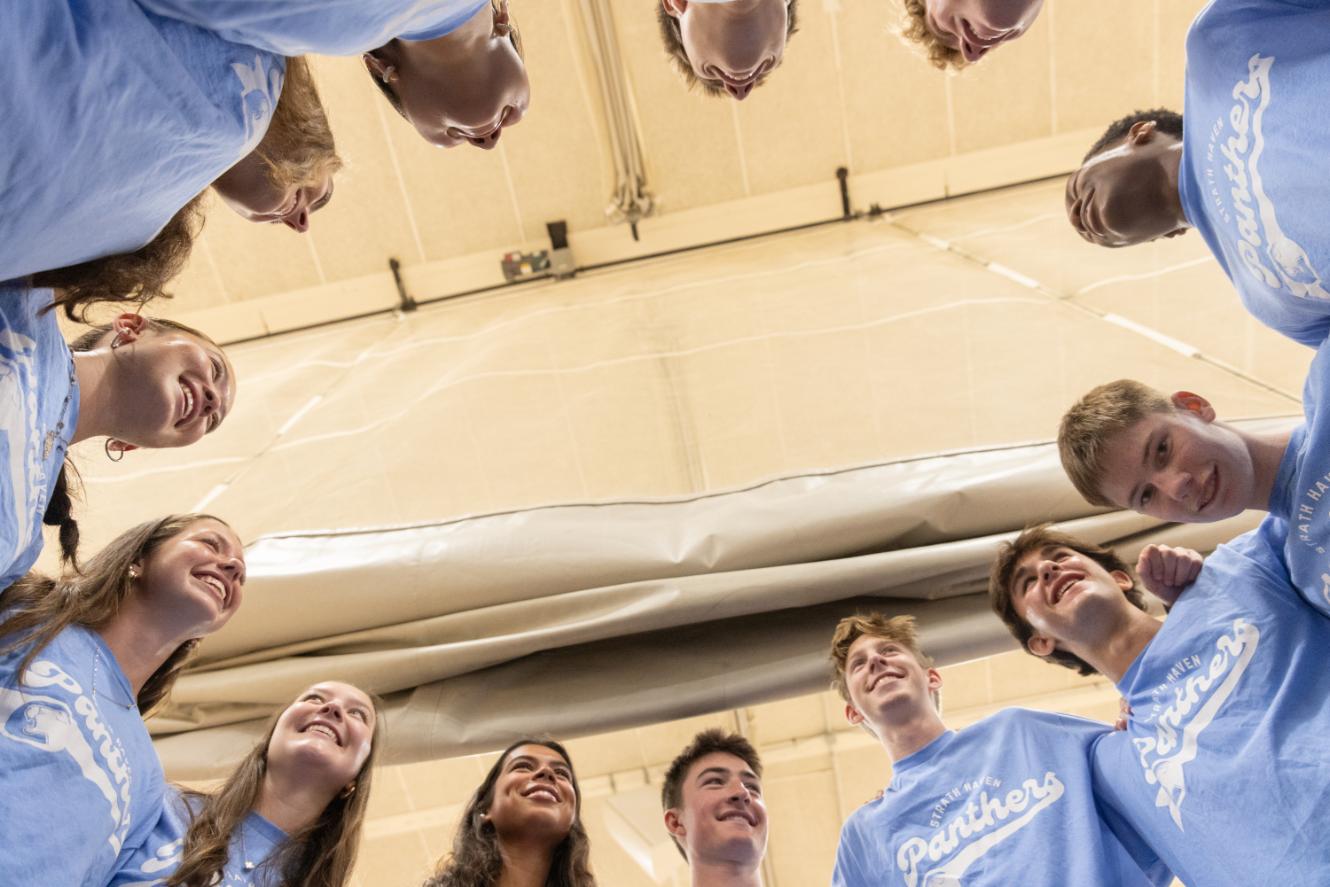
Some council members believe that students should have more than a one-third share in what the new policy calls “the primary voice of the student body.”
“I wish the student vote had a larger say because the teacher vote and the student vote are both one-third, but the Student Council is not about the teachers,” Stockman said. “It’s about the students.”
In the past, the Student Council was decided on a popular vote. The change to a one-third election system predates when Herr Paul and Neeson began advising the Student Council in 2022, according to Paul.
“When they just did a student vote, it wasn’t always the best leaders, and then things weren’t getting done,” Paul said. “And one of our goals is to get things done, especially when it comes to Homecoming.”
Some suggest that the student vote might be more effective if students could be better informed about candidates through speeches at an assembly.
“It’s kind of sad we don’t do a speech like the elementary schools,” Yang said. “[In] my elementary school, when we did elections, we had speeches. Why doesn’t the high school have one? Because it really lays out what everyone’s doing.”
Yang also believes that students should have more input in other areas.
“I would really like it if the school board representatives could actually have some more say on things outside of just happenings and achievements,” Yang said. “It’d be nice if they could make school board representatives’ role include complaints.”
Saito believes that while the council is always changing, it upholds its main goal of answering to the students.
“We really do try our best to hear everyone’s opinions and try to push for new things and better things for the students,” Saito said. “Whatever opinions and ideas the students have, we always want to hear that — that is literally our job.”
Our fundraiser provides readers with the opportunity to boost our award-winning student journalism team. We are hoping to attend the Fall 2026 National High School Journalism Convention in Orlando, FL, as well as to print additional color pages in the upcoming school year. Contributions also allow us to cover website hosting costs, fund staff training, and purchase equipment. Thank you for considering a donation!