
Trendy or toxic? The cost of fast fashion
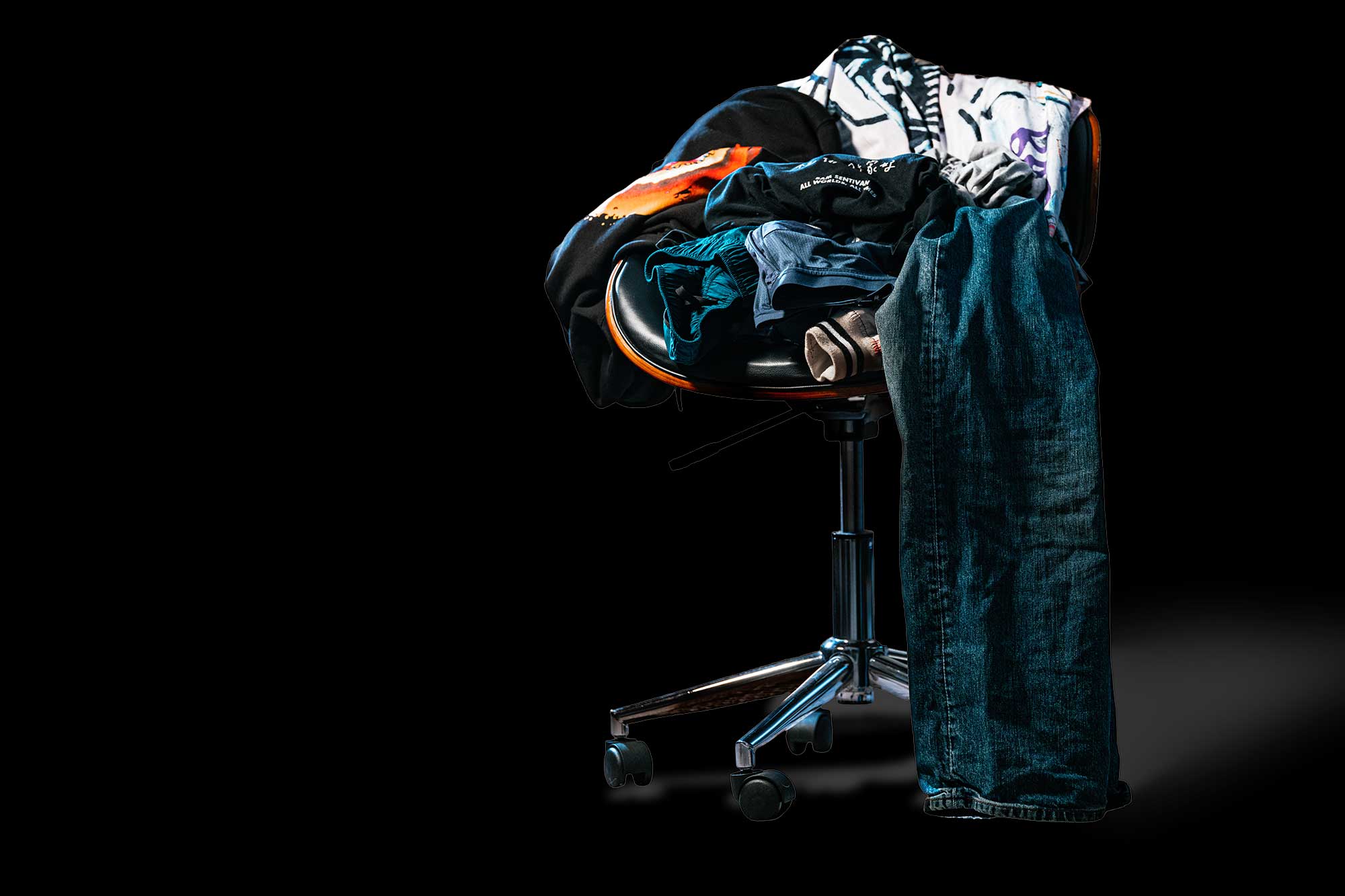
With the prevalence of fast fashion in today’s world, there are resources to understand the threats it poses and consciously choose more sustainable options.
Behind the low prices and trendy appearance, fast fashion often comes with a hidden cost. On an individual level, shopping sustainably is an alternative to alleviate the overconsumption of fast fashion.
Fast fashion is commonly characterized by the mass production of low-cost, low-quality clothing. It breeds rapidly changing trends and employs marketing techniques that fuel overconsumption.
The business model experienced accelerated growth in the late 90’s into the 2000’s; however, the origins of the fast fashion industry we know today began in the 1970’s.
When big retailers began manufacturing in foreign countries, production was outsourced to countries including China, Bangladesh, South Korea, and India.
The strategy of overseas production relied on lower costs and higher profits, emphasizing speed and efficiency over the ethical treatment of employees.
According to Earth.org, 80% of apparel is made by young women between the ages of 18 and 24.
Sophomore Alice Rieger knows the downsides of fast fashion, and prioritizes thrifting the clothing she wears to focus on personal style in a sustainable way.
“It’s usually made by people who are being underpaid,” Rieger said. “It’s not worth other people’s pain in order to get something cute you’ll only wear for two weeks.”
“Exploitation comes in the form of low wages, unsafe factory conditions, and sexual harassment,” states The Georgetown Journal of Gender and the Law. “Only 2% of garment workers in the world are paid wages that cover their basic needs. Now, with the continued rise of fast fashion pushing almost all western companies to use suppliers in other countries, the exploitation of garment workers has increased. The exploitation just occurs further away from Western consumers.”
Because production takes place largely overseas, many consumers either aren’t aware of the effects or fall victim to an out-of-sight, out-of-mind mentality.
Brands like Shein, Edikted, and Zara come to mind when most people think of fast fashion. However, there are countless other fast fashion brands that do not appear as such.
Just a few of these brands disguising themselves behind higher price points and the illusion of luxury include Free People, Anthropologie, Lululemon, and more.
While these brands don’t operate exactly the same as brands like Shein, they too fall under the umbrella of fast fashion due to frequent product turn-around and low-quality materials.
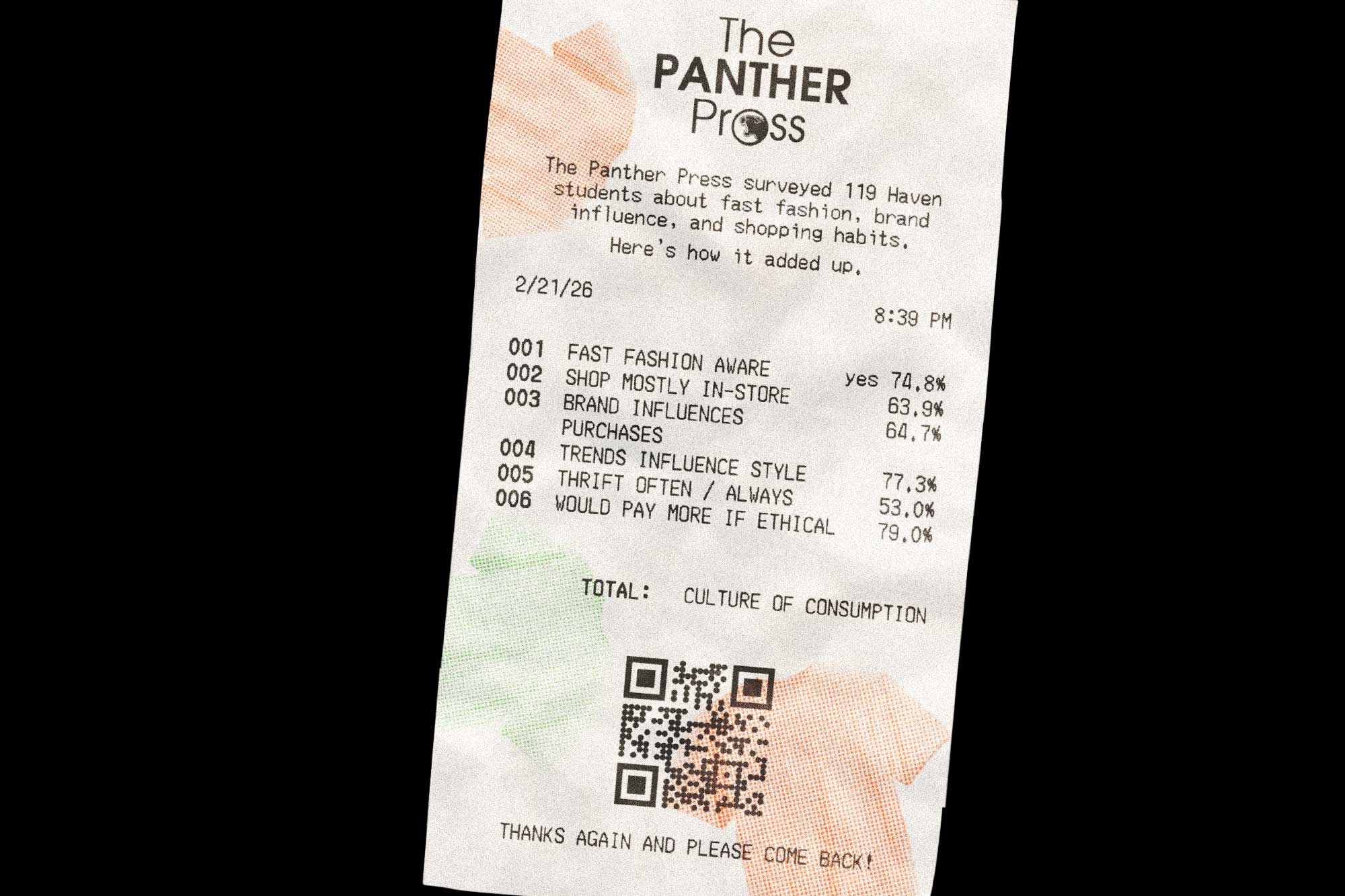
In an anonymous Google form survey sent to Haven students by student editors of the Panther Press, it was revealed that nearly 80% of the 119 surveyed students would be willing to pay higher prices if they knew that their clothing was being made ethically or sustainably. However, it can be hard to differentiate between what’s sustainable and what’s not.
Some key indicators of fast fashion brands include low prices, frequent sales, aggressive marketing, and trend-oriented inventory.
Junior Georgia Graham acknowledges the hold that fast fashion has over buyers, specifically brands that may not align with certain stereotypes.
“Brands that are popular, like Brandy Melville, because every single girl is wearing it, that’s the first one that pops into my mind,” Graham said.

With the easy accessibility of clothing these days, we often don’t stop to think about the lifespan of each piece we buy. It has become less about cherishing and passing down clothes, and more about being at the forefront of trends.
While shopping online for fast fashion offers more convenience and may seem cheaper at first glance, it comes at a cost.
To reduce prices, synthetic materials are often incorporated into clothing. According to Earth.org, 60% of clothes are made with plastic-based materials. This causes microplastics to shed from the plastic fibers, resulting in degradation that reduces the longevity of your clothing.
With this low quality, people are often less likely to mend errors that aren’t worth repairing. This is strategic, as it leads consumers to replace and buy more clothing over a short period of time.
Sean Bruton, owner of Lunch Break Vintage in Swarthmore, notes the deceiving nature of inexpensively manufactured clothing.
“Even at Five Below, they have t-shirts that may be $5, but last maybe a few washes,” Bruton said.
“It’s too short, or it shrinks, or it rips. You’re going to end up spending more money in the long run if you keep buying that kind of stuff.”
Fast fashion brands that have “new” and “trendy” styles now will inevitably run their course and will continuously be replaced by new clothes.
For high-end brands like Chanel and Louis Vuitton, it was common practice to just have two fashion seasons, one in the fall/winter and the other in the spring/summer. Through fast fashion, however, brands such as Zara and H&M have adapted approximately 52 “micro-seasons.” This drastic shift in the number of available styles floods websites and stores with new clothing, causing pieces to quickly go out of style.
However, clothes that have been “out” for a given number of seasons often reappear.
Terry Crossan, co-founder of Heart & Soul’d in Swarthmore, finds that the inventory of her thrift store reflects this cycle.
“Last year’s Shein, last year’s Charlotte Russe, that’s what we see donated. Trends are exactly what they are, a trend. Everything old becomes new again,” Crossan said.
In an online world, fast fashion trends are often driven by social media influencers and celebrities.
“You could see a cute top or pants, and you’ll be like, ‘Wow, I really want that,’ Just because one person is wearing it,” Graham said. “If you see a celebrity wearing something, then you want to get it.”
Bruton describes how viral designs undergo mass reproduction, causing authenticity to decrease with each copy that fast fashion brands make.
“Let’s say you see Harry Styles wearing a vintage t-shirt. The fast fashion brand is gonna find that vintage t-shirt and then [copy] the graphic and put it on a t-shirt,” Bruton said. “You can get whatever Harry Styles wore for $8, whereas maybe that actual t-shirt was from the 70s or 80s and has been through 45 years full of life.”
Rieger curbs the pressure to be on-trend by having her own personal taste.
“I try to keep up with some trends,” Rieger said. “I own ballet flats, which was a big trend in 2025. I know polka dots are a big thing right now, and I love polka dots, but it’s mainly trends that I like. I don’t try to keep up with something that I don’t enjoy myself.”
Instead of producing clothes for the sake of convenience, ethical and environmentally conscious production methods are values held at the forefront of sustainable fashion.
Recycled materials, organic cotton, and even hemp are common materials used in sustainable clothing to lessen environmental impacts.
Patagonia is an example of a sustainable brand that holds quality to the highest standard, outlining in their mission statement that, “the best product is useful, versatile, long-lasting, repairable and recyclable. Our ideal is to make products that give back to the Earth as much as they take.”
Reducing overconsumption can especially be practiced through buying secondhand and vintage clothing, offering sustainability.
When sourcing inventory for Lunch Break Vintage, Bruton prioritizes carrying clothes that are 20+ years old and 100% cotton to ensure good quality.
“They’re long lasting, built better, and mostly made in the USA, which provides a better closet life,” Bruton said.
With the longevity that secondhand and vintage clothing offers, Bruton suggests that you have the ability to spend less money in the long run.
“In 2026 with the economy and everything that’s happening, it’s cheaper to shop secondhand,” Bruton said. “I could tell you my outfit that I’m wearing right now top to bottom is probably $55 including shoes, pants, sweatshirt, everything. And that’s incredible. I’ll be wearing this for the next 15, 20 years.”
Kristen Mancini, co-founder of Heart & Soul’d in Swarthmore, explains how owning a thrift store has influenced her thought process when buying her own clothes.
“I definitely think it’s made me a more discerning shopper and more conscious in my decision making, whether I’m shopping in a big box store or if I’m thrifting, and I like that,” Mancini said.
Through the survey inquiry about student shopping habits, nearly 65% of students reported that they are influenced by brand names, I.e. more likely to purchase clothing because of the brand.
Students’ most purchased brands included Gap, H&M, Brandy Melville, Edikted, Shein, and more, with 57% noting the influence that trends have on them.
64% of students shop for clothes mostly in-store, something that studies have shown can contribute to greater spending.
Rieger prefers shopping in-person rather than online, as she is able to thoroughly assess the item, guaranteeing satisfaction and future wear.
“I mainly pay attention to the texture, because if it doesn’t feel nice, I’m not buying it, which is a big issue with buying online, because you can’t feel it,” Rieger said. “I always pay attention to sizing. I like to try things on most of the time, and then I also pay attention to imagining if I could actually wear it myself, or if I would just throw it away after a week.”
Graham emphasizes her effort to purchase with intent, rather than impulse buying just for the sake of it.
“I mostly shop for new clothing online when I’m looking for something specific, but if I’m just going out shopping, I try to go second-hand,” Graham said. “If I see something that I really like and I’ve been wanting for a while, then I’ll buy it, but I don’t just shop to shop.”
Fast fashion can be hard to avoid, but there are ways that students can focus on the true impact behind each purchase they make.
Supporting local secondhand stores like Heart & Soul’d or Lunch Break Vintage is an option that brings students closer to their community.
At Heart & Soul’d, donated clothes are sold to help support foster and adoptive services in Delco.
“We have been able to find a home for everything,” Crossan said. “To see the gratitude when you drop off clothes to Fostering Hope, City Team in Chester, the wardrobe in Lansdowne, and knowing those clothes are going to be used for somebody to go out on a job interview who can’t afford fast fashion. For somebody to wear just to stay warm who can’t afford fast fashion. For kids to go to school in something that doesn’t have holes in it and feel a little more confident.”
Through donating and thrifting clothing, Crossan expresses how students can bring life to clothes that were no longer wanted.
“In our mind, it’s not really secondhand,” Crossan said. “It’s second life. It’s gone from the first person to the second person, and hopefully it’ll go on to the third, fourth, and fifth.”
Mancini finds meaning in the connections that can come from wearing thrifted clothing.
“It feels very personal, because my own wardrobe has mostly been coming out of here,” Mancini said. “I’ve had customers come in and say ‘My son’s t-shirt looks really cute on you!’ It’s just cool to know where those things come from.”
Rieger believes that if students are willing to put the time into finding pieces at the thrift store, the reward is well worth it.
“If you put in the effort, you can find clothes that are cute, even at a cheaper price than what you would at a fast fashion place online,” Rieger said.
With the wide variety of clothing that thrift stores offer, students can mix and match pieces to fit their self-expression.
“I don’t try to follow what other people think is cute,” Rieger said. “I guess it’s my way of being creative, because I’m not good at art and I’m not good at a lot of artistic expression, so I guess clothes are the only way to do it.”
Freshman Rosalia Irizarry sources most of her personal style from thrift stores and flea markets, with inspiration ranging from the early 2000s to Japanese Harajuku fashion.
“My style is influenced by trends everywhere,” Irizarry said. “I wouldn’t say from the main trends that are happening, but different styles from different times.”
Finding a community of people who share similar style allows experimentation with clothing without pressure to fully commit to a purchase.
“I share [clothes] with my sister all the time, and then my friends and I, sometimes one of us will buy something, and then we’ll just trade,” Graham said.
Mancini emphasizes that the freedom to explore personal style is made more accessible with the lower price point of purchasing clothing secondhand as opposed to fast fashion.
“You can find really unique things to create your own path so that you’re not subscribing to the trend, but you’re not so far outside of it that you feel uncomfortable,” Mancini said. “It gives people a little more variety and flexibility to find out what their style is and for a lot less.”
Even through the ever-changing state of the fashion world, students have the ability to sustainably express themselves with the clothes they buy.
“When it comes down to really wanting to feel good about yourself and take time, thrift stores are the kind of places that you really need to set foot in,” Crossan said.
Our fundraiser provides readers with the opportunity to boost our award-winning student journalism team. We are hoping to attend the Fall 2026 National High School Journalism Convention in Orlando, FL, as well as to print additional color pages in the upcoming school year. Contributions also allow us to cover website hosting costs, fund staff training, and purchase equipment. Thank you for considering a donation!