Itchy eyes. Nose ablaze. Cerebral construction site. Is it a nightmare, or is it allergy season?
Spring allergy season, which Premier Allergy, Asthma, and Sinus Care cites as running from late February to June, has a tremendous effect on the everyday lives of affected students. With tree pollen typically at the highest levels during these months, students can face symptoms akin to that of common cold or viruses. But why does this happen, and how is it affecting how students perform on a given day?
To understand why allergy season affects people the way it does, it is important to understand what pollen is. Pollen is the main cause of springtime allergies, and the CDC (Centers for Disease Control and Prevention) defines pollen as “an airborne allergen.” The site classifies pollen grains as, “tiny ‘seeds’ dispersed from flowering plants, trees, grass, and weeds.”
Though the pollen seeds are small in size, they are known to cause allergic symptoms due to the body’s wrongful classification of the seeds as a danger.
“In some people, antibodies in the immune system see pollen as a danger and trigger the activation of immune cells called mast cells. Histamines are then released, causing allergy symptoms to begin,” professor at Indiana University School of Medicine Dr. Mark Kaplan stated in an Indiana Health article.
The CDC describes this in a similar way, stating “If you have allergic rhinitis, your body then responds to the allergen by releasing chemicals that can cause symptoms in the nose.”
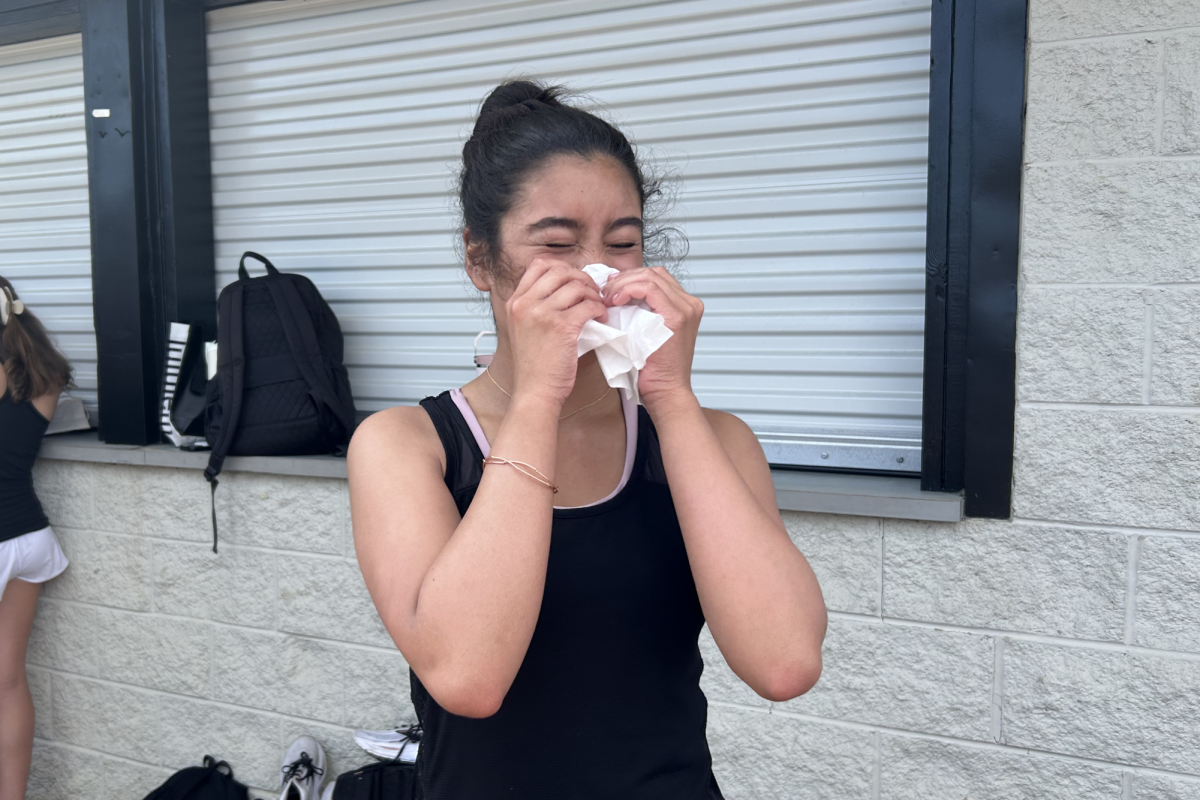
Senior Minori Saito is affected by allergies, and expresses shock that she only experiences them during this time of year.
“In the winter, I’m perfectly fine. And then towards the beginning of spring, I remember there was one school day, I just came into school and I sneezed at least twenty times in every single class,” Saito said.
This, according to Indiana Health, has to do with the process of pollination that mainly occurs in the spring.
“People develop allergies to specific pollens, grasses and trees and those allergens only appear when plants pollinate (spread their seeds). In the winter, allergens in grass, trees, and pollens are not released,” Kaplan said. “But in spring, when everything starts growing again, and those allergens are released, people that are sensitized to allergens begin to react.”
School nurse Ms. Sarah Fleming sees an increase in allergy patients during these months.
“I think because the spring is the time when all of your flowers are blooming, your grass is growing back from being dead all winter. There’s just more things in the air that can irritate you, because it’s a period of regrowth,” Fleming said.
With CHOP (Children’s Hospital of Philadelphia) describing common allergy symptoms as “stuffy or runny nose, sneezing, itchy eyes and nose, sore throat, cough, and dark circles under the eyes,” there are numerous ways for students to be affected during the school day.
“My eyes are always closed because I’m sneezing,” Saito said. “On the days that it’s really bad, I just take allergy medicine and that usually fixes it, and then I just feel groggy and stuffy.”
CHOP also cites other allergy consequences found in children, including tiredness, poor concentration due to fatigue, ear and sinus infections, and asthma exacerbations.
The most common solution to allergies is to take allergy medications, which when taken on a proper schedule can induce significant results.
“The number one thing you can do if you know you have allergies is start taking allergy medicine before they start bothering you,” Fleming said. “This prevents the runny nose, the watery eyes, the headaches and other things that might hinder [student] performance.”
Sophomore Daisy Sanchez Mejia is allergic to pollen and agrees that when she feels these symptoms while at school, medicine can help.
“Overall, I don’t really think it has a huge effect on my work that I do in school. Sometimes, I don’t feel my best and I do feel a little sick,” Sanchez said.
While struggling with her allergies, Saito is enthusiastic that they signify a change in the year.
“It’s a fine sacrifice for this beautiful weather we’ve been having, so I’m happy,” Saito said.