In Haven’s humanities classes, “The Danger Of A Single Story,” a TED Talk by Chimamanda Ngozi Adichie, is a staple. But are we really following her advice?
Adichie grew up without seeing herself represented in literature, according to her TED Talk. The books that surrounded her either centered around things foreign to her, or included negative portrayals of people like herself.
“She does a really great job of showing how children are influenced by what they read, and how their perceptions of the world and themselves are influenced by those experiences,” English department co-chair Mrs. Miriam Drew said.
Freshman Zarah Bach shares her sentiment, observing that women in literature are shown as less emotionally or physically strong.
“It can lead [young women] to think that they shouldn’t have a voice and shouldn’t speak up,” Bach said.
In literature and popular media, women are often portrayed as shallow, helpless, and worldly, with a strong and frequent emphasis on romantic relationships rather than deep friendships.
“It’s hard to see a female character as separate from their boyfriend or husband,” senior and president of feminism club Anna Warley said.
When heroic deeds and the potential for complex emotions are isolated to a selective portion of the population, this individual, curated perspective becomes a false, but painful, reality.
“Good female characters are nuanced, flawed and real, like good male characters. Good female characters are interesting and have agency i.e. they have motivations, make decisions, take action and affect the story,” writes author Jennifer Ellis in her blog.
So, where does Haven fall?
“It’s gotten better as the years have gone on, especially as teachers or students have lobbied for more representation,” Warley said.
Warley notes the importance of teachers facilitating discussions about books that are deemed important to read, but also can perpetuate harmful stereotypes.
“When books have these inaccurate portrayals, the teachers do try to recognize that those are inaccurate or those are from the past, and things have changed,” sophomore Conrad Nuschke said.
Drew reflects on how she and her colleagues have recently modified the curriculum to include diverse voices, citing “A Raisin In The Sun” by Lorraine Hansberry as an example.
“It has a really strong female cast and a strong female writer,” Drew said. “There’s still debatably a male protagonist there, but he’s very flawed, and there isn’t the same dynamic of giving the female characters less space on the page.”
Required reading varies by class and grade level, but overall, Haven students are seeing improvements.
“We’re always asking, ‘what are the stories we need now?’” Drew said. “And that guides our thinking about which texts we choose.”
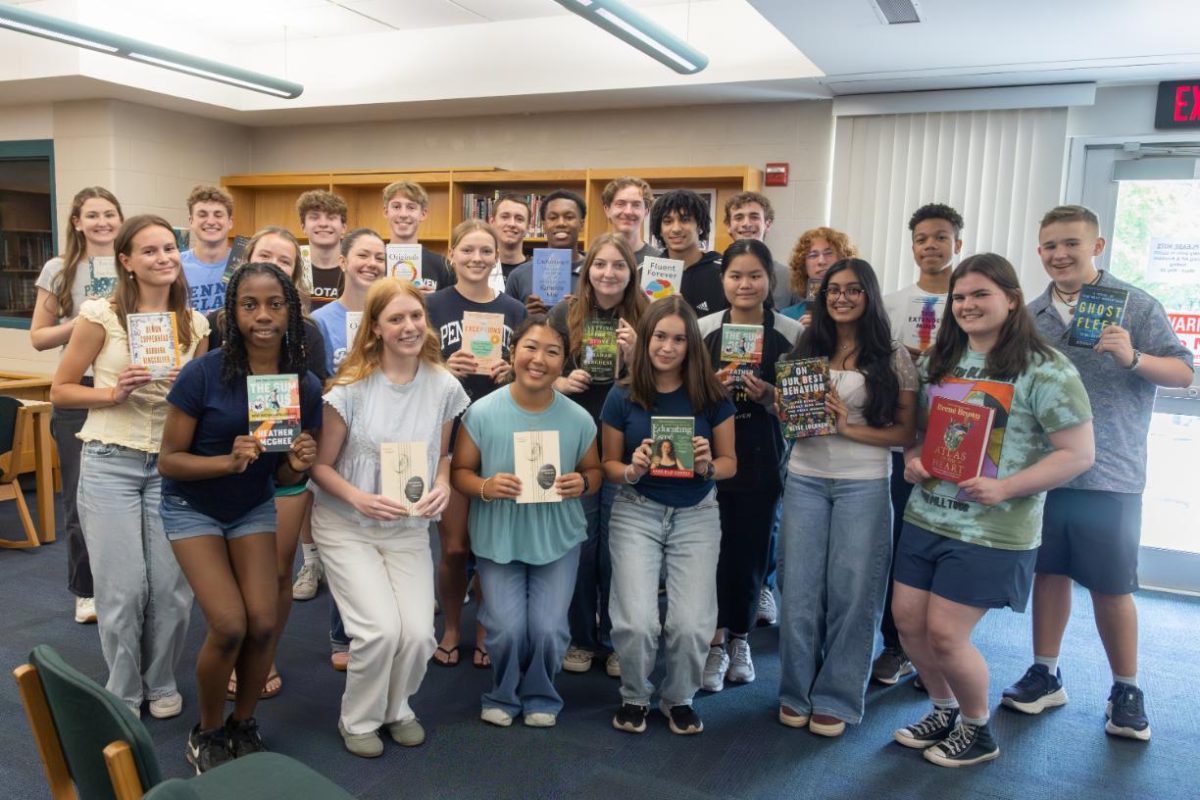
Reading outside of your comfort zone — as Drew puts it — and independent reading is another significant aspect of Haven’s English curriculum that allows students to interact with perspectives that differ from their own.
“Anytime a student really connects thoughtfully with a text, that’s a win,” Drew said.
While this changing landscape of female voice in literature is the reality we live in, even more consequential is the narratives you choose to surround yourself with, and how you interact with female characters in literature.
“Think about a character more for who they are, rather than that aspect of them, first before anything else,” Nuschke said.
Warley highlights the importance of young women having an equal chance to see themselves in and look up to female protagonists.
“Everybody’s had a different experience with the classes they’ve taken, and how they’ve grown up, and the media they’ve consumed,” Warley said. “There’s a lot of different ways to grow up and come of age as a woman. Reading and hearing stories about women — especially women that succeed, women that follow their own path – it’s really important.”
Each opinion represented in The Panther Press is the view and voice of the writer. Opinions, as the selection and curation of content by the editors, do not represent the views of the entire Panther Press staff, the adviser, the school, or the administration.