

Approximately 57% of students across the US play a sport at some point in high school. Some athletes have been training their whole lives for their sport and some just want to try something new. Haven coaches explore a few key differences that make varsity athletes stand out.
One of the main things that Haven coaches pay attention to is the athlete’s attitude and character. They want someone who can not only perform on gameday, but also be a good teammate throughout the season. Girls varsity soccer coach Mr. Gino Miraglia particularly looks for girls who he can depend on to show up and give their best effort.
“Girls [who are the most successful] take their studies seriously, are a good human, have a great attitude, [and are] reliable. [Girls who] just stay positive and dependable,” Miraglia said.
One way athletes can show dependability is not only showing up to school practice but also practicing on their own. Girls varsity softball coach Mr. Michael DeAngelo looks for this in tryouts. He wants to be able to depend on an athlete to show up and give effort in practice but take the initiative to get better on their own.
“To get to a certain level, you need to actually put in the work yourself and go above and beyond the baseline or the average of others,” DeAngelo said.
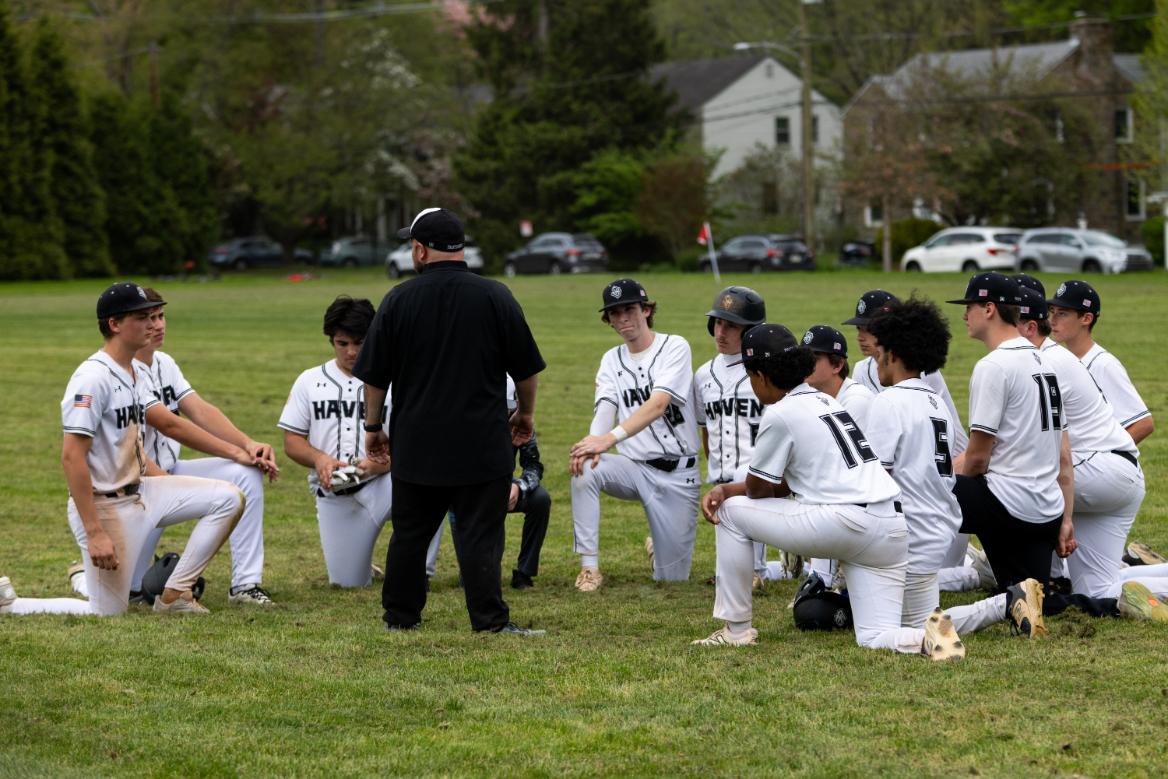
Boys varsity baseball coach Mr. Brian Fili also emphasizes the importance of practice. He specifically emphasizes the work ethic of the athlete and the difference it can make in their performance.
“[Varsity athletes have to have] a work ethic and a commitment to get better at practice, specifically practicing things they’re not good at,” Fili said. “Every athlete has a chance to get better no matter what sport they’re playing, and then to understand their weaknesses and be able to work on those, instead of just working on the things that they know they’re good at.”
Girls varsity field hockey coach Mrs. Carly Reid emphasizes the importance of coachability. Reid explains how a positive mindset enhances an athlete’s performance.
“I think they also have [to have a] really positive mindset. That is a huge example of one’s character, when they can take constructive criticism and feedback and turn it into a positive growth mindset,” Reid said.
Even though swimming is a no cut sport, meaning that everyone makes the team, boys swimming coach Mr. Brian Ward agrees, highlighting how having a good character not only benefits you, but also your team.
“I think that if an athlete’s really good at what they do, and they have the talent, it’s really important that they have good character too,” Ward said. “Because if they have really good talent, but they don’t make good choices and they don’t do the right things, then eventually they’re going to do things that harm them and other people, and their talent isn’t ever going to get a chance to really take off.”
In addition to having good character, being a positive leader within the team is just as important.
“Accountability, dedication, and leadership [are all very important]. I feel like you could have a really talented team, but if you don’t have good senior leadership extended from the coaching staff, you’re going to have a hard time being successful,” Fili said.
Another way that an athlete can be successful in their sport is putting in the work between seasons. Miraglia particularly notices when athletes put in the extra work over the summer. He provides a workout plan to follow over the summer and sometimes athletes will follow it, but he can spot out the athletes who put in that extra effort to improve their game.
“In tryouts, the first thing that sticks out [to me] is fitness. Did this person do anything on their own to show that they care? I think when you get to high school, your skills can only get so much better, but I always say, ‘[can you be] the fastest, fittest version of yourself?’” Miraglia said. “[That] is something that separates you from day one and that’s something in soccer that shows the coaches that this girl put in a lot of work in the summertime to show that she wants to be a varsity athlete.”
Another way that coaches notice an athlete’s work ethic is when they ask questions. Reid particularly notices this and encourages it.
“I think every athlete should be their own advocate,” Reid said. “[That means] coming up to the coach and saying, I want to be here next year, I want to be part of the team. What do you see? How can you help me? And I’m willing to sit down, have that conference, send them practice plans or ideas of what they can specifically work on.”




![The girls varsity lacrosse team shouts during their pre-game huddle at their playoff game against Villa Maria Academy on May 19. The team lost 5-15, but the athletes had a lot of great saves and plays. "Coming off of a season losing a lot of valuable players, I think we really adjusted well, and we came together [and] did the best we could," Tessa Dignazio (10) said.](https://shpantherpress.com/wp-content/uploads/2026/05/GEBHARDT-GLAX-5.19-19.jpg)