Let me set the scene. It’s late at night, and I’m doing homework I should have started way earlier.
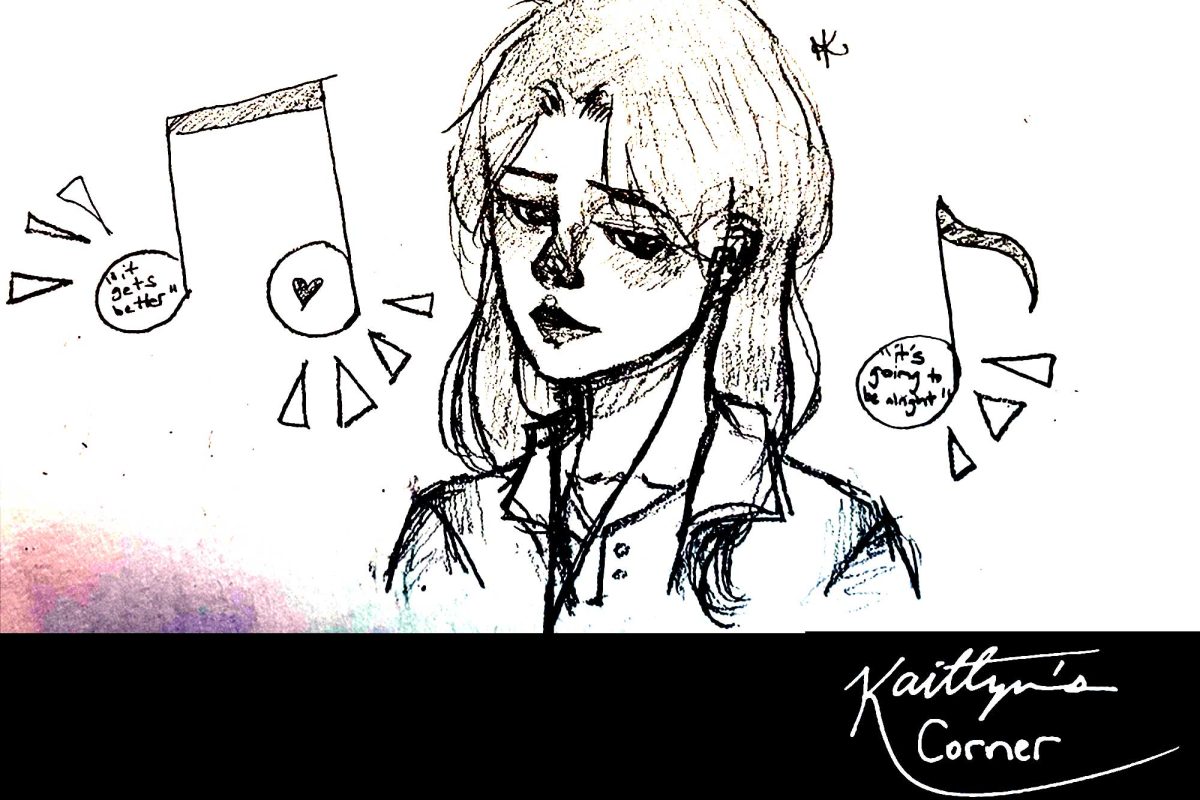
After a certain hour, I start needing music in the background to stay awake and make me feel less lonely, so I found a playlist on YouTube titled ‘everything is going to be alright.’
In the comment section, I found a shared sense of community. Here are some of the comments:
“Been feeling so lost and confused lately, like I’ve forgotten who I was and whoever I wanted to be. I’ve faltered from my duties and I don’t even know what I really want. But i really needed to hear this”
“With everything happening in our world, it feels impossible to hope for better days, but this human heart is just so stupid that we all still hope for them. I hope it gets better.”
“trust me guys it gets better. i just beat cancer”
My first instinct was to think that it was melodramatic to put all your issues out there for strangers to see. Also, I didn’t even like some of the songs on the playlist, and they certainly didn’t draw feelings of excessive compassion out of me.
But when I went back to my work, I couldn’t stop replaying those heartfelt messages in my head. What power did this random playlist have, that it could make thousands of people confess their deepest fears and problems on the internet and receive kindness from total strangers?
It’s a power that many people felt when Bad Bunny’s Super Bowl halftime show spotlighted how unifying music can be. The Super Bowl is the most-watched annual sporting event in the United States, and he used that platform to elevate every American, especially in his hometown of Puerto Rico.
You can dislike Bad Bunny’s music in the same way I initially disliked the YouTube playlist I found. But you should still be able to appreciate how wonderful it is that people who do enjoy that music were able to come together because of it.
Out of all the mass-produced media out there, music is a safe place for people to share their lives. In the chaos of the world right now, the sanctuary music provides is unmatched.
If music is the great equalizer, judging people’s music taste does the opposite. When people like music, they become part of a community of fans. While it’s okay to have your own opinions on music, criticizing someone’s music taste just because it’s different from your own obliterates their sense of comfort in that community — now it’s something they feel judged for.
Criticizing the craft or quality of the music is fine, but it’s shaming the listener where I draw the line. After all, music taste is deeply personal for many people, to the point where it has become an indicator of personality, according to a study from the University of Cambridge.
I hope there are more microcosms like that playlist out there, where people aren’t judged for their circumstances. Music has the power to create that space, no matter the instrumentation, the genre, or lyrics.
It’s a universal feeling to want to be loved, and we want someone to be there for us when we’re down. Everybody needs something to tell us that everything is going to be alright.
Each opinion represented in The Panther Press is the view and voice of the writer. Opinions, as the selection and curation of content by the editors, do not represent the views of the entire Panther Press staff, the adviser, the school, or the administration.