
Why do people want to lead? Plato’s “The Republic” states that “the punishment which the wise suffer who refuse to take part in the government is to live under the government of worse men,” suggesting that the best people for the job usually aren’t interested in power. But nowadays, does that still hold true?
Leadership, leadership, leadership. It’s the buzzword featured in every college application advice video, job description, and under the requirement section for National Honor Society (NHS) and the student council application. For stressed high school students, that word haunts our nightmares.
For an example, look no further than Haven’s very own club ecosystem. Overseen by activities co-directors Mme. Susan Stadnicki and Ms. Lawson, Haven boasts more than 60 different clubs. These organizations vary in size and specialty as well as productivity and participation.
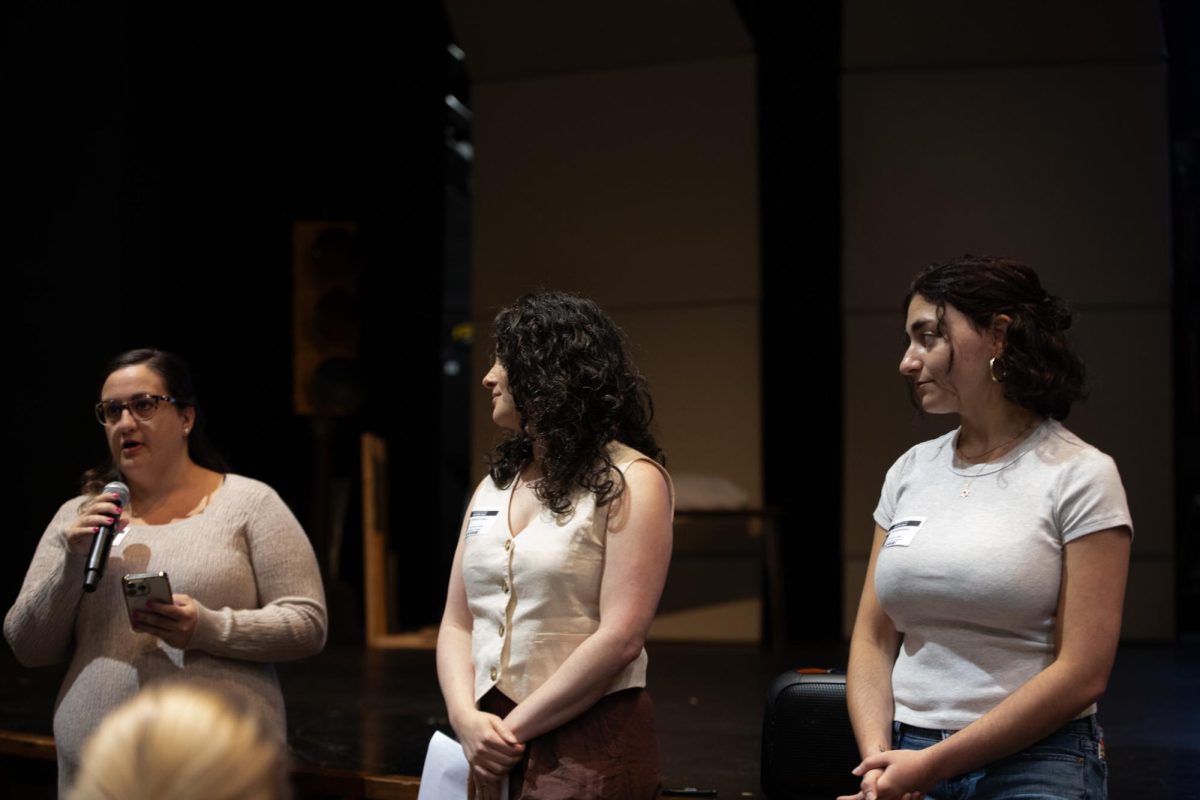
Stadnicki explains the motivation for students who want to create and lead these clubs.
“On the idealistic side, we would say their motivation is that they have a passion about something and they want to work with like minded people on it,” Stadnicki said. “On the cynical side of it, people are looking for resume building. To say, ‘I founded a club,’ or ‘I’m a leader of a club, that they can fill out for applications.’”
I’m not saying leaders aren’t necessary. Everybody knows that without strong leadership an organization will fail. But it seems that students are almost allergic to participating in something without the benefits of a leadership role.
“With the class cabinet, there’s probably 50 people that are in the Schoology, but not even half of them go, maybe 15 people per meeting,” sophomore class cabinet and Interact Club Jane Allsman said. “Same for Interact. It’s usually the same group, and not so much a newcomer who just decided one day ‘I’m going to go to the Access Center after school and spend my afternoon helping people.’”
Allsman describes the disconnect between the credit students take for being a part of a club and their actual commitment to it.
“Even though a lot of people might say, ‘Oh, I’m in this or that club,’ the actual amount of work and effort that people are willing to put in for a certain amount of clubs is a small portion,” she said.
In our idealization of leaders and leadership we often forget the so-called “followers” who are just as responsible for an organization’s success. For example, the wildly impactful #MeToo movement thrived because of excellent leadership from its creator Tarana Burke, but it gained traction because of the countless women who shared their stories, attended protests and did the work to promote it.
Though the word “follower” might not be so buzzy on a brag sheet, I would encourage more high school students to embrace it.
Being a follower can be just as rewarding as being a leader. Especially for service-based organizations, being able to see your work come to life, even if it’s just a small part of a larger goal, is gratifying. It might sound cliche, but many hands do make light work.
Service-based clubs like Interact or Haven Helps often provide collaborative service opportunities for their members, making them some of the more successful and substantial clubs at Haven.
Interact co-president Lexi Benzing cites successful events like frequent trips to the Access Center, Wish Night, and the “Tat Your Teacher” fundraiser. She describes how Interact keeps their members engaged.
“I think that if you can show what this is bringing to their lives, and they can see how this is impacting others through their own personal work, I think that’s really important,” Benzing said.
Being an active and participating member of a club rather than a leader suggests a lot about a person’s character. Usually, they genuinely care about the cause they’re rallying around, as they’re willing to do a lot of the actual work without taking away much to slap on a college application.
“My grandma had cancer and my uncle had breast cancer,” sophomore Addie Chichester-Constable, a member of Unite for Her club, said. “So an organization that helps women with breast and ovarian cancer is very important to me, but I don’t necessarily need leadership, I love just being able to help do bake sales.”
We somehow harbour this obsession with creating things, even if it’s not out of genuine concern for an issue. Oftentimes, it’s just for the sake of saying you made something new.
Stadnicki mentions the amount of club requests she receives that are essentially copies of clubs that already exist.
“We’ve all had a lot of like environmental groups, we’ve had a lot of service groups, we’ve had a lot of different science ones,” Stadnicki said. “So we check in with them and see ‘how do you differentiate from this other one? Can you two work together?’” Stadnicki said.
High school students are encouraged to create some sort of passion project if they want to attract attention from colleges, but who is going to actually be working for your non-profit if every other high schooler is too busy starting their own?
Maybe the world doesn’t need new “stuff.” Maybe it just needs more people to be working on and improving the things we already have.
Look, if you’re destined for leadership, if you’re called to higher action, that’s great. We need people like you.
But let me convince you that being a lowly follower wouldn’t be the worst thing in the world.
The beauty of being a follower is the absence of pressure. When you’re working on something just because you’re passionate about it with no outside motivation other than pure curiosity, that is the most valuable thing you can have, no matter what college admission officers think.
Each opinion represented in The Panther Press is the view and voice of the writer. Opinions, as the selection and curation of content by the editors, do not represent the views of the entire Panther Press staff, the adviser, the school, or the administration.